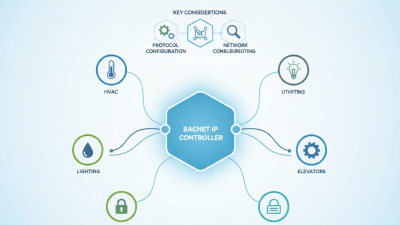
Choosing an Open Source BACnet Controller is not just a matter of finding downloadable code. The right choice must fit the building, the devices, and the people who will maintain it. A controller may look capable on a product page, yet lack support for a required BACnet service or a practical path to updates. Small details count. Check the network type, such as BACnet/IP or MS/TP, then compare supported objects, point counts, interfaces, and hardware requirements against your project.
BACnet expert Steven Bushby’s published work offers a useful takeaway: sharing a protocol name does not guarantee interoperability. Test the controller with the actual equipment, and review its conformance documentation before committing. Ask who reviews code changes, how security issues are handled, and whether clear licensing permits your intended use. Look for active maintenance, readable documentation, and a community that answers technical questions. A lively forum is helpful, but it is not a support plan.
There is no perfect controller. Even a promising project may have thin documentation or require more setup than expected. Be honest about that. A bench test with one device, a sample point list, and a few days of logging can reveal awkward gaps before they become expensive. This guide’s ten tips will help you assess compatibility, security, usability, and long-term support—without treating “open source” as a guarantee of quality. Verify the details. Then choose for the building you actually have.
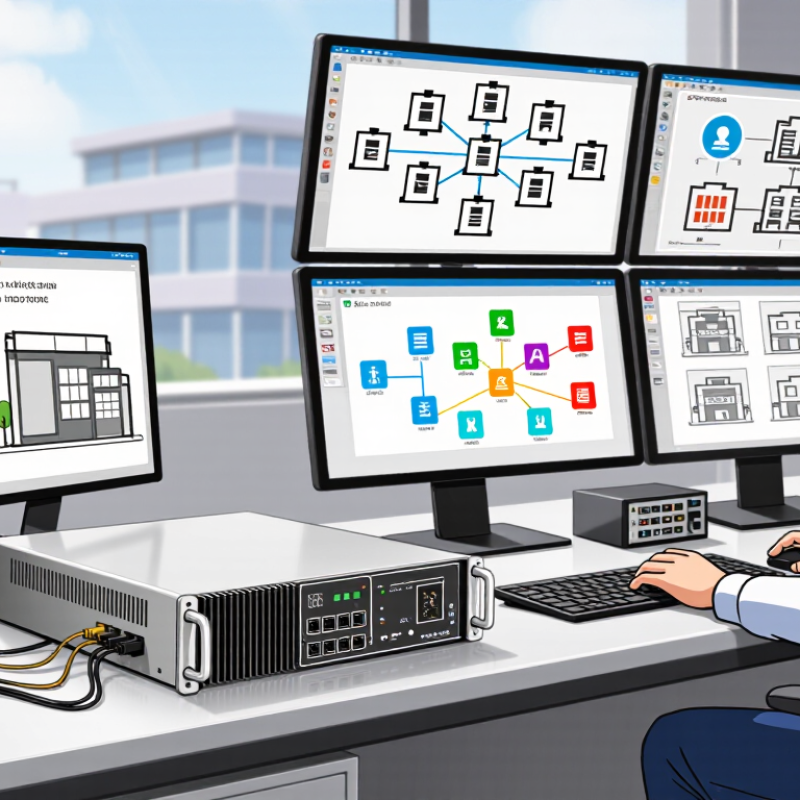
An open source BACnet controller combines software, a processing unit, and network connections to manage building equipment. It communicates using BACnet, a protocol designed for building automation. The controller represents equipment through objects, such as temperature inputs, fan commands, and occupancy states. These objects let other compatible devices read values or request changes. In practice, a room sensor might report 22°C while a controller adjusts a valve or fan.
Core functions often include device discovery, data reading and writing, schedules, alarms, and event reporting. Controllers may connect through BACnet/IP or serial MS/TP networks. Their exact capabilities depend on the software, hardware, and configuration. Open source does not mean effortless. Someone still needs to configure network settings, map points, and verify that objects behave as expected. A displayed value can look plausible and still be mapped to the wrong sensor.
Testing matters. Check device identifiers, object names, units, and command priorities before connecting equipment to a live system. A bench setup can pass every basic check, then struggle when network traffic increases or devices use different settings. That gap is easy to underestimate. Clear documentation and repeatable tests make troubleshooting less guesswork-driven. Still, open implementations may vary in maturity, so reviewing updates and testing the specific hardware remains part of responsible deployment.
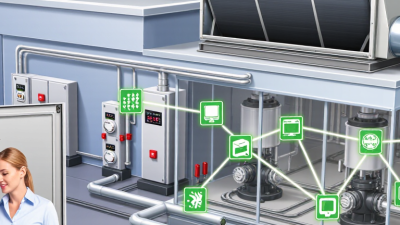
Before comparing open source BACnet controllers, write down what the building actually needs. List each controlled system, such as air handlers, pumps, meters, and room sensors. Record required points: temperature, occupancy, alarms, setpoints, and schedules. Note whether equipment communicates over BACnet/IP, BACnet MS/TP, or both. A protocol label alone is not enough. Check supported object types, device limits, network speed, and whether the controller can expose the data operators need. Keep an equipment schedule nearby; assumptions often hide missing points.
Tip: Map each device before choosing hardware. Confirm its BACnet device instance, object list, and transport. For MS/TP, verify baud rate, wiring layout, and trunk capacity; for IP, confirm addressing and network access. Review the protocol conformance statement, then test with a representative field device—not only a simulator. Small mismatch, big delay.
Define practical limits too: cabinet space, power, operating temperature, maintenance skills, and acceptable downtime. Decide which functions must continue if the network drops. Compare the controller’s license, update path, documentation, and community activity; these affect long-term maintenance. Test a small panel with actual devices and point names. The first map will probably be imperfect. That is useful. Revise it before procurement, while wiring changes remain cheap.
Choose hardware by the job it must do, not by its specification sheet alone. Count BACnet/IP and MS/TP devices, check serial-port isolation, and confirm the controller can handle your expected point count. Leave spare memory and ports for expansion. Check the basics. In a plant room, heat, electrical noise, and cramped enclosures can matter more than headline processor speed. Verify watchdog recovery, secure firmware updates, and whether configuration survives a power interruption.
Software deserves the same scrutiny. Confirm support for the BACnet services and object types your building actually uses, then test discovery, alarms, and trend logs with representative devices. The U.S. Department of Energy’s 2020 Smart Energy Analytics Campaign reported median annual energy savings of 8% among participating organizations using energy information systems. That makes reliable, exportable trend data more than a convenience. The 2024 State of Open Source Report found that 95% of surveyed organizations planned to maintain or increase open-source use. Adoption alone, though, does not prove a project is actively maintained.
Inspect the repository’s release history, issue response times, documentation, and security-advisory process. Ask whether several contributors can review changes, or one person carries the whole project. Try building the software on a clean machine; missing steps often appear there. Check the license and update path with your technical team. Community support can be generous, but it is not a service-level agreement. A practical pilot should include a failed-device test, a network interruption, and a handoff to someone who did not configure the controller. One limitation remains: lab success may not predict years of field maintenance.
Tip: Start with the threat model, not the feature list. Check whether the controller supports BACnet/SC or can be isolated behind a properly configured gateway. Do not expose plain BACnet/IP to untrusted networks. Ask for a vulnerability disclosure process, signed releases, a dependency inventory, and a clear patch schedule. The 2024 Data Breach Investigations Report found that 68% of breaches involved a non-malicious human element. Clear operating procedures matter as much as clever code.
Tip: Test reliability during ordinary failures. Disconnect the network, restart the controller, and confirm that schedules and settings recover correctly. Check whether alarms remain visible and whether backups can be restored without specialist tools. The 2024 Cost of a Data Breach Report estimated the global average breach cost at $4.88 million. That figure is not specific to building controls, but it underscores the value of prevention and recovery planning. Small details matter.
Tip: Look beyond the current release. Review recent commits, issue response times, release notes, and the number of active maintainers. Confirm that source code, build instructions, and migration steps are available. Try a firmware update on a test unit before touching a live plant room. I would not treat a busy repository as proof of safety; activity can fade, and documentation can lag. That deserves a second look.
| # | Tip | What to Check | Practical Evidence or Acceptance Check | Warning Signs |
|---|---|---|---|---|
| 1 | Verify protocol and device interoperability | Confirm the supported BACnet services, object types, data types, and transport options match the intended devices and network. | Test discovery, reading, writing, and required services with representative equipment. Review documented protocol support and conformance information. | Broad claims of compatibility without a service list, test results, or a way to reproduce interoperability checks. |
| 2 | Understand the security model | Determine whether communication uses BACnet/IP or BACnet/SC. BACnet/IP does not itself provide encryption or peer authentication; BACnet/SC uses TLS-based secure connections. | Document the network boundary, authentication approach, certificate handling, and any gateways or routers required by the design. | Assuming that a private network alone encrypts traffic, or treating BACnet/IP and BACnet/SC as having equivalent security properties. |
| 3 | Review network exposure and segmentation | Check listening interfaces, allowed peers, firewall rules, routing, and any use of broadcast management across IP subnets. | Confirm the controller is reachable only from required networks and that discovery and routing behavior are documented and tested. | Unrestricted access from business or public networks, unnecessary open ports, or undocumented broadcast-routing dependencies. |
| 4 | Inspect authentication and access controls | Check how operator access, configuration changes, credentials, and privileged functions are controlled. | Verify unique accounts where supported, least-privilege roles, secure credential storage, and a documented process for changing default credentials. | Shared default passwords, credentials stored in plain text, or no separation between routine operation and administration. |
| 5 | Assess update and vulnerability handling | Look for a documented process to report, assess, fix, and communicate security issues, including dependency updates. | Check the project’s security policy, supported versions, release notes, and a clear method for obtaining and verifying updates. | No security contact or policy, unresolved high-impact issues, or updates that cannot be traced to a source revision. |
| 6 | Test behavior during network failures | Evaluate how the controller responds to lost connections, delayed messages, unavailable devices, and recovery after service interruption. | Run controlled disconnect-and-recovery tests and confirm alarms, retries, timeouts, and state recovery behave as documented. | Stale values presented as current, uncontrolled repeated retries, or a need for manual intervention after ordinary network recovery. |
| 7 | Check fault tolerance and safe operation | Identify what happens after process crashes, power loss, storage exhaustion, or invalid configuration. | Confirm restart behavior, configuration backup and restore, watchdog or health monitoring where applicable, and safe fallback behavior for the installation. | Unclear recovery steps, corrupted configuration after restart, or control outputs that enter an unsafe state without an alarm. |
| 8 | Evaluate observability and diagnostics | Review logs, health indicators, time synchronization, alarm handling, and the ability to diagnose protocol and device communication problems. | Confirm logs include useful timestamps and error context, can be retained appropriately, and do not expose credentials or sensitive data. | Silent failures, unbounded log growth, missing timestamps, or sensitive information written to routine logs. |
| 9 | Assess project activity and maintainability | Review release history, issue and pull-request handling, documentation, automated tests, and the number of people able to maintain the code. | Look for reproducible builds, versioned releases, documented installation and upgrade steps, and evidence that important defects are addressed. | Long periods without maintenance, undocumented build steps, unreviewed changes, or reliance on a single unavailable maintainer. |
| 10 | Plan licensing, dependencies, and lifecycle support | Check the software license, third-party dependency licenses, supported operating systems and hardware, and the effort needed to maintain a deployed version. | Keep a dependency inventory, verify that the intended use complies with the license, and define an upgrade, backup, and end-of-support plan. | Unclear license obligations, unsupported dependencies, undocumented hardware assumptions, or no owner for long-term updates. |
An open-source BACnet controller should be tested on the network it will actually serve. Map its objects to existing devices, then check names, units, priorities, schedules, and change-of-value updates. Confirm that alarms and trend logs survive a restart. Small details matter. A clean lab test can still flatter a controller; real networks are messier.
For performance, simulate busy periods with many points updating at once. Record response times, missed updates, CPU load, and recovery after a network interruption. Compare results with the project’s requirements and BACnet’s ASHRAE Standard 135. The U.S. Department of Energy’s 2018 Commercial Buildings Energy Consumption Survey counted 6.8 quadrillion Btu of commercial-building energy use. That scale makes even modest control faults worth investigating, though the survey does not measure controller savings.
Total ownership cost includes more than the hardware. Estimate commissioning hours, integration scripts, hosting, backups, security updates, and staff training over several years. Ask who will maintain custom code when the original developer leaves. Open source can reduce license fees, but it does not make support free. I would test one representative floor before expanding; that adds effort upfront, and the results may still miss unusual equipment. Keep the test notes, labor estimates, and failure logs beside the purchase calculation.