2026 Top Open Source BACnet Controllers for Global Buyers
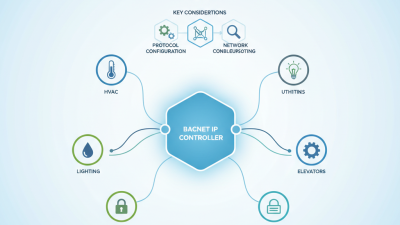
Building owners are entering 2026 with sharper demands for interoperability, transparency, and long-term control. An Open Source Bacnet Controller can expose firmware, configuration logic, and integration methods for independent review. That visibility matters when a controller manages air-handling units, chilled-water pumps, lighting schedules, and alarm points across different vendors.
The International Energy Agency reports that buildings consume about 30% of global energy and produce roughly 26% of energy-related emissions. Its Buildings sector analysis also highlights controls, efficiency upgrades, and digital management as important reduction tools. These figures explain why controller selection is no longer a minor procurement decision. It affects operating costs, maintenance response, and carbon performance.
BACnet remains central to this discussion. ASHRAE Standard 135-2020 defines the communication framework, while BACnet International supports testing, certification, and interoperability practices. H. Michael Newman, a respected BACnet author and practitioner, has emphasized a fundamental point: “BACnet is a standard, not a product.” That distinction deserves attention. A compliant controller may communicate successfully, yet still differ greatly in documentation, cybersecurity processes, update policies, and technical support.
This guide compares leading open-source and open-architecture BACnet controllers for global buyers in 2026. It considers protocol support, hardware availability, Linux compatibility, edge processing, documentation quality, and lifecycle risks. The picture is not perfect. “Open source” does not automatically mean secure, maintainable, or truly interoperable. Buyers should inspect repositories, release histories, test evidence, and supplier accountability before deployment. Small details matter, including terminal labeling, replacement time, and whether a technician can recover the device at 2 a.m.
What Open Source BACnet Controllers Are and How They Work
Open source BACnet controllers are programmable devices that manage HVAC, lighting, meters, and other building systems through openly documented software and interfaces. They usually communicate with BACnet/IP or BACnet MS/TP networks. A controller reads sensor values, applies control logic, and sends commands to field equipment. The process can happen every few seconds.
Open source does not mean uncontrolled. Reliable designs still require access permissions, code review, firmware management, and documented testing. ANSI/ASHRAE Standard 135 defines BACnet services, objects, and communication rules, helping devices exchange information across different systems. In practice, an engineer may inspect the control script, change a temperature schedule, and test the result without waiting for proprietary software support.
The need is measurable. The UNEP Global Status Report for Buildings and Construction 2023 states that buildings used about 30% of global final energy and produced roughly 26% of energy-related emissions. Open controllers can support better scheduling and fault detection, especially when they connect meters with occupancy data. However, openness alone does not guarantee savings. Poor sensor placement can still produce unstable valves, noisy readings, and wasted energy. A 2024 building automation market study projected double-digit annual growth through 2028, reflecting stronger demand for connected controls. Yet forecasts are not field results. Buyers should examine protocol compliance, cybersecurity records, local technical support, and commissioning evidence before deployment.
Key BACnet Standards, Protocols, and Controller Features
For global buyers in 2026, an open-source BACnet controller should support recognized standards, not only attractive hardware specifications. BACnet is defined by ANSI/ASHRAE Standard 135 and ISO 16484-5. These references guide object types, services, device discovery, alarms, schedules, and data exchange. The details matter.
BACnet/IP suits Ethernet networks and larger building systems. BACnet MS/TP remains practical for field devices over RS-485, especially where wiring costs matter. BACnet Secure Connect, or BACnet/SC, adds encrypted communication through TLS and certificate management.
Buyers should check whether the controller supports router functions between IP and MS/TP segments. A complete PICS document and clear BIBB information can reveal more than a product brochure. They show supported services, object limits, and interoperability boundaries.
In field evaluations, I inspect network recovery, time synchronization, trend storage, and restart behavior. A watchdog timer can restore operation after a frozen process. Local logs should show failed writes, lost devices, and certificate errors. Good controllers also provide writable schedules, alarm priorities, configurable COV reporting, and safe firmware updates. Open-source code improves auditability, but it does not automatically guarantee secure maintenance. Documentation is sometimes incomplete, and that deserves honest attention. I would test a sample controller with mixed vendors, noisy RS-485 wiring, and a temporary network outage before approving a large deployment. Small compatibility gaps can become expensive service visits.
How to Compare Compatibility, Security, Hardware, and Support
For global buyers, BACnet compatibility means more than reading a few temperature points. Check supported object types, services, transport methods, and device profiles. Test alarm routing, schedules, trend logs, and MS/TP networks in real conditions. A controller may pass a laboratory test yet fail beside an older field panel. BACnet Secure Connect support deserves careful review, especially for encrypted communication and certificate management. BTL-style testing evidence can improve confidence, but it does not replace site commissioning.
Security should cover the whole lifecycle. Ask whether the hardware supports secure boot, signed updates, strong credentials, audit logs, and separated network interfaces. Verizon’s 2024 Data Breach Investigations Report found that the human element appeared in 68% of breaches. Clear access roles and practical recovery procedures therefore matter. Open source code increases transparency, but it does not automatically create secure software. That assumption needs challenging.
Hardware selection affects reliability and energy performance. UNEP’s 2024 Global Status Report for Buildings and Construction reports that buildings consume about 32% of global energy and produce approximately 34% of energy-related emissions. Choose isolated RS-485 ports, watchdog timers, industrial temperature ranges, and replaceable storage. Support is equally measurable: require public documentation, response targets, update policies, and regional commissioning help. I would not trust a low-cost controller without a published maintenance path. The cheapest purchase can become the most expensive service call.
2026 Top Open Source BACnet Controllers for Global Buyers
Comparison of anonymous open-source controller architectures using practical buyer criteria. Scores use a 1–5 scale and are intended as a neutral planning benchmark rather than a vendor ranking.
Global Purchasing, Deployment, and Maintenance Considerations
Global purchasing starts with interoperability, not a feature list.
A 2026 open-source BACnet controller should support BACnet/IP, BACnet Secure Connect, and legacy MS/TP networks.
Buyers should request reproducible firmware builds, signed updates, clear licensing, and a software bill of materials. Regional electrical approvals and radio requirements must also be verified before shipment. A low purchase price becomes expensive when customs delays, unavailable spare parts, or unfamiliar wiring standards stop installation.
Deployment should match the building’s physical reality.
Test one air-handling unit, one variable-air-volume box, and one meter before scaling. Record device instance numbers, baud rates, certificates, and fallback settings on site. The International Energy Agency reports that building operations represent about 30% of global final energy demand. Better control sequences can therefore produce measurable value, but only after commissioning. A controller that works in a laboratory may fail in a humid plant room.
Maintenance needs local ownership.
NIST SP 800-82 Rev. 3 recommends asset inventories, network segmentation, controlled remote access, and tested recovery procedures for operational technology. Keep two tested firmware versions, not just the newest one. Review logs monthly and replace failed sensors with documented equivalents. The UNEP 2024 Global Status Report states that buildings and construction consume 32% of global energy and create 34% of global carbon emissions. These figures justify careful automation, though energy savings are never guaranteed. My practical concern remains overlooked documentation. It is still often incomplete.