Choosing an Open Source Bacnet Controller is not just a software decision. It affects how sensors, valves, and supervisory systems communicate across a building. The International Energy Agency’s Buildings report for 2023 estimates that building operations account for about 30% of global final energy use and 26% of energy-related emissions. Those figures make reliable control more than a technical preference. Small failures can leave rooms overheated, fans running, or alarms unseen.
BACnet, standardized as ANSI/ASHRAE Standard 135, supports communication among building automation devices. Yet “open source” does not automatically mean easy integration. NIST researcher Steven T. Bushby’s published work on building controls points to a practical caution: shared protocols still need careful implementation and interoperability testing. That is a paraphrase, not a direct quotation. Details matter.
This overview compares the main controller types: Linux-based single-board systems, embedded hardware controllers, software-based controllers, and gateway or edge platforms. Each offers a different balance of cost, flexibility, reliability, and maintenance effort. A Raspberry Pi may suit a lab bench or pilot project; a production site may need industrial hardware, watchdogs, and documented recovery procedures. Not every open project provides those safeguards. That gap deserves a closer look. The sections ahead examine where each type fits, what to verify in its BACnet support, and how to judge project health before deployment.
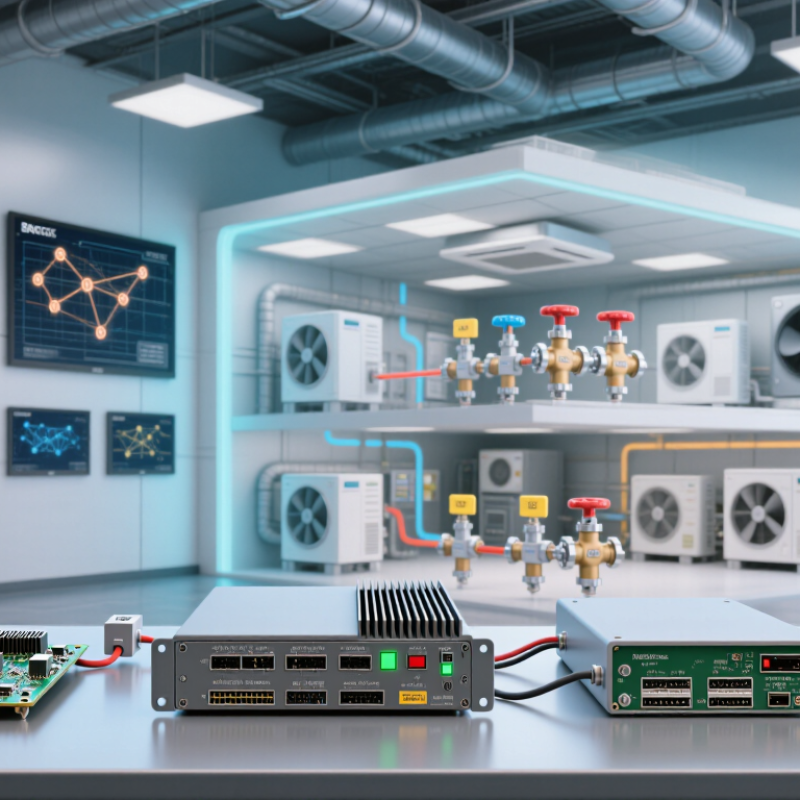
Open-source BACnet controllers are best classified by function, hardware, and protocol transport—not by the word “open” alone. A controller may expose its source code while relying on closed hardware, or offer open hardware but only limited BACnet services. That distinction matters when checking whether a device can be maintained, inspected, and adapted on site.
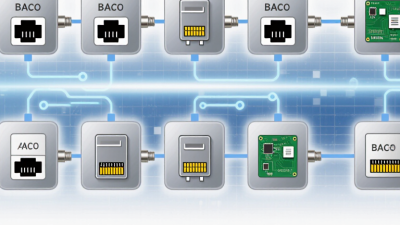
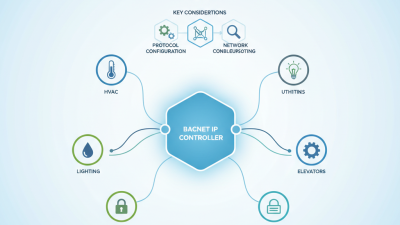
At the device level, embedded controllers run local sequences and connect to sensors, relays, and actuators. Some communicate over BACnet/IP through Ethernet; others use BACnet MS/TP over a two-wire RS-485 trunk. Gateways translate between BACnet and other building protocols, while supervisory controllers coordinate schedules, alarms, and data across multiple devices. These roles can overlap. The boundary gets messy.
A practical comparison should record supported BACnet services, transport, I/O capacity, update access, and behavior during network loss. A controller that serves a small boiler room has different needs from one coordinating dozens of air-handling units.
Test recovery after a network interruption, too. Documentation may look complete, yet field wiring still exposes gaps.
Embedded BACnet controllers serve a defined job inside a building, such as regulating an air-handling unit, boiler loop, or lighting panel. Their compact hardware can sit close to sensors and actuators, reducing long runs of control wiring. Small details matter. A controller may read a duct temperature sensor, compare it with a setpoint, then adjust a valve or fan output.
Open-source software can make control logic easier to inspect and adapt, but it does not automatically make every hardware component open. Check the processor, memory, input and output types, and supported BACnet transport before choosing a unit. Some installations use BACnet/IP over Ethernet; others rely on MS/TP over a serial bus. Clear object names and stable point mappings help technicians identify signals during commissioning. That part is often underestimated.
For dedicated systems, predictable operation matters more than a long feature list. A controller should continue its local sequence if a supervisory connection drops, where the design allows it. Test sensor failures, power recovery, and communication loss before handover. Keep configuration files and firmware versions documented, since small changes can affect schedules or alarm behavior. Open-source projects may also vary in documentation quality. That assumption deserves a check. A neat prototype can still be awkward to service in a hot mechanical room with limited network access.
Linux-based BACnet controllers can take several forms, depending on the building and its automation needs. Compact embedded computers suit equipment panels with limited space. Fanless industrial PCs offer more memory for larger applications, local databases, and diagnostic tools. Edge gateways can connect BACnet devices with other protocols while keeping selected data available locally.
The platform is flexible. Open-source software lets engineers inspect configuration files, adapt scripts, and choose how trends or alarms are stored. A controller might read a room sensor, adjust a valve, and publish the result over BACnet/IP. For legacy networks, a suitable interface can support BACnet MS/TP. That detail matters. Linux itself does not provide every needed protocol service; teams must verify software support, interface compatibility, and update procedures before deployment.
This flexibility comes with practical trade-offs. A small board may run cool and fit behind a panel, but it can lack storage or dependable recovery features. Industrial hardware costs more, yet may tolerate heat and continuous operation better. Test reboot behavior, network loss, and backups under realistic conditions. I have seen designs become needlessly complicated when every data point is logged. Start with the points operators actually use, then expand carefully.
| Controller Type | Typical Platform | Common BACnet Connectivity | Best-Fit Use | Key Advantages | Practical Considerations |
|---|---|---|---|---|---|
| Linux Single-Board Controller | Compact Linux computer with Ethernet, USB, and GPIO; field I/O is commonly added through expansion hardware. | BACnet/IP over Ethernet is a common option. BACnet MS/TP requires a suitable RS-485 interface and software support. | Prototyping, small building systems, educational projects, and custom supervisory control. | Low-cost hardware options, broad Linux tooling, and flexibility to integrate open-source BACnet libraries with application code. | Check interface isolation, watchdog behavior, storage endurance, and restart recovery. GPIO alone is not a substitute for protected, industrial field I/O. |
| DIN-Rail Linux Controller or Gateway | Industrial Linux hardware designed for panel mounting, often with Ethernet, serial ports, and optional digital or analog I/O. | May support BACnet/IP directly; BACnet MS/TP availability depends on the serial hardware, drivers, and BACnet software implementation. | Building control panels, protocol integration, and installations that need a compact, serviceable enclosure. | Panel-friendly form factor and, depending on the hardware, more suitable power and interface options than general-purpose boards. | Verify the exact I/O types, electrical isolation, operating-temperature range, and whether the selected software supports the required BACnet services. |
| Fanless Industrial PC Controller | Ruggedized x86 or ARM Linux computer, typically with Ethernet and options for serial or expansion interfaces. | BACnet/IP is typically implemented through Ethernet. BACnet MS/TP can be added through compatible serial or RS-485 hardware. | Larger control applications, data collection, analytics, and systems that combine BACnet with web services or databases. | More compute and storage capacity than a small embedded board; can host multiple services alongside a BACnet application. | More capable hardware can increase power use and cost. Plan for software updates, backups, security hardening, and recovery after power loss. |
| Embedded Linux Module with Custom I/O | System-on-module or embedded computer integrated into a purpose-built carrier board with application-specific interfaces. | Typically uses Ethernet for BACnet/IP; serial and RS-485 interfaces can be designed into the carrier board for supported MS/TP implementations. | Repeatable products or installations that need a tailored combination of BACnet networking and physical I/O. | Allows the hardware, Linux image, and control application to be tailored to a defined use case. | Requires more engineering and validation. The integrator is responsible for board design, Linux maintenance, interface behavior, and lifecycle planning. |
| Virtualized Linux Controller | Linux virtual machine or container running on a server or edge-computing host. | BACnet/IP can operate through a correctly configured network interface. MS/TP generally requires access to physical serial or RS-485 hardware. | Supervisory applications, testing, development, and software services hosted on existing computing infrastructure. | Convenient deployment, snapshots, and separation of application services from the host operating system. | Network configuration, multicast or broadcast handling, host availability, and access to physical interfaces must be checked. Virtualization does not replace dedicated field I/O hardware. |
Selection note: Open-source BACnet software can be used on Linux, but hardware capability and protocol support depend on the chosen implementation and interfaces. An open-source stack does not by itself establish BACnet testing or certification; verify applicable conformance requirements for the intended project.
BACnet gateways are useful when a building combines equipment that speaks different protocols. A gateway can expose Modbus meter readings as BACnet objects, or pass selected BACnet values to an MQTT broker. This lets a building management system read a boiler’s supply temperature alongside room sensors, even when their native protocols differ. Small details matter.
Open-source BACnet controllers can run gateway software on compact computers or embedded hardware. They may connect BACnet/IP over Ethernet with BACnet MS/TP on a serial line, or bridge BACnet to Modbus RTU and TCP. Configuration usually involves mapping registers to BACnet object types, units, and identifiers. A temperature value mapped as a percentage is still readable, but not useful. Testing each point against the device’s documentation helps catch these errors.
Gateways do not make every protocol behave alike. Update rates, communication failures, and data quality can vary across connected devices. A slow serial meter may not deliver changes as quickly as an IP sensor, and a gateway can add another point of failure. Keep mappings documented, use clear names, and check how the controller reports stale data. I would not assume a successful connection proves the values are correct; that part deserves careful review.
Compare open-source BACnet controllers by their duties, not just processor speed. Room controllers handle local sensors, valves, and fan-coil units. Programmable controllers suit custom sequences and mixed inputs. Supervisory controllers coordinate schedules, alarms, and data across networks. The 2018 U.S. Energy Information Administration Commercial Buildings Energy Consumption Survey counted 5.9 million commercial buildings, spanning about 97 billion square feet. That variety makes one controller type a poor fit for every site. The 2023 Global Status Report for Buildings and Construction estimated buildings caused 37% of global energy- and process-related emissions in 2022. Control choices have real consequences.
Check point capacity, physical inputs and outputs, supported BACnet services, and network options such as IP or MS/TP. For a small mechanical room, reliable local control during a network outage may matter more than a large point count. That matters. Review documentation, firmware update practices, access controls, and the project’s BACnet conformance information; open-source code alone does not prove interoperability. A practical comparison should also include commissioning time and replacement effort. These details are easy to underestimate. For example, a low-cost board may need extra isolation or enclosure work before it can live beside electrical equipment. The trade-off is not always obvious. A spreadsheet score helps, but site conditions can still change the answer.