Top 10 BACnet HVAC Controllers for Global Buyers
Selecting the right Bacnet Hvac Controller can shape an entire building’s comfort, energy use, and maintenance workload. Global buyers face a crowded market, with products designed for offices, hospitals, hotels, factories, and data centers. Specifications often look similar. Field performance rarely is.
This guide reviews ten leading BACnet HVAC controllers for international purchasing teams. It considers BACnet MS/TP and BACnet/IP support, point capacity, protocol compatibility, sensor inputs, outputs, cybersecurity features, and commissioning tools. Practical details matter. A controller managing a VAV box may need different capabilities from one serving a rooftop unit or chiller plant. Clear alarm logs can also save hours during a hot afternoon failure.
The comparison draws on manufacturer documentation, integration practices, and common building automation requirements. It also considers firmware support, technical training, warranty terms, local distribution, and replacement availability. These factors become critical when a project spans several countries and time zones. A low purchase price can become expensive after installation.
No controller fits every project. That is worth admitting. A powerful model may overwhelm a small commercial site, while a basic unit may limit future expansion. Buyers should verify objects, network limits, certificates, and software compatibility before signing an order. Bench testing is wise. So is asking integrators about real commissioning experiences, not only marketing claims. This overview aims to provide a balanced starting point for engineers, contractors, consultants, and facility owners seeking dependable BACnet-based HVAC control.
BACnet HVAC Controllers: Core Functions and Communication Standards
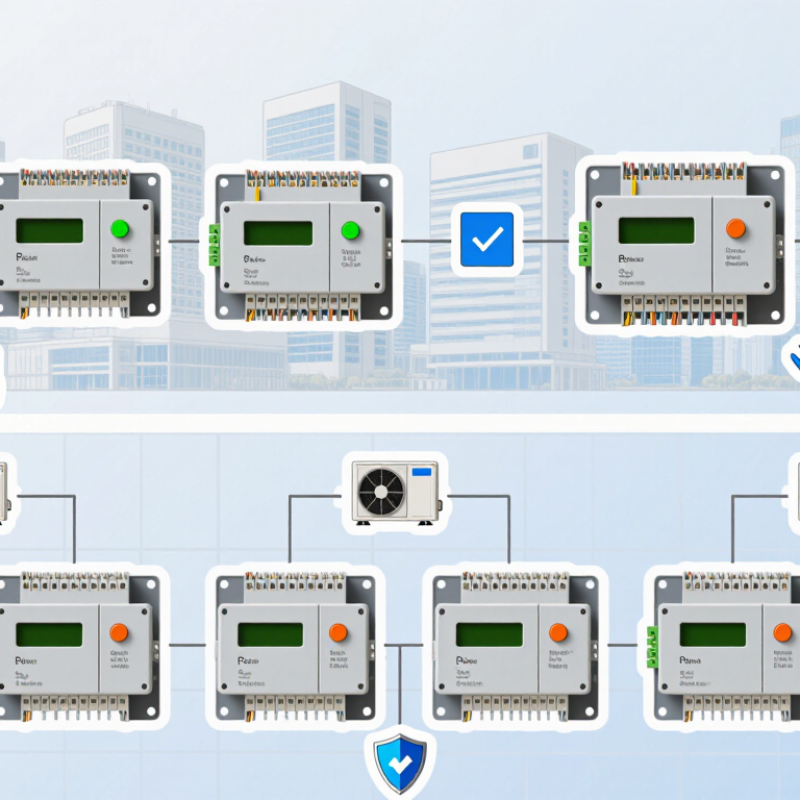
BACnet HVAC controllers translate sensor signals into practical building actions: valve modulation, fan staging, alarm handling, scheduling, and trend logging. Their value depends on reliable communication, not only processing speed. ASHRAE Standard 135 defines BACnet services and objects, while ISO 16484-5 supports international building automation interoperability. Buyers should verify support for analog, binary, multistate, calendar, and schedule objects before comparing the top ten options.
Communication details matter in mixed systems. BACnet/IP uses Ethernet or IP networks and suits supervisory integration across buildings. BACnet MS/TP runs over RS-485 and remains useful for simple field buses with careful termination. BACnet Secure Connect, or BACnet/SC, adds encrypted, certificate-based communication through TLS and WebSockets. It can simplify routed networks, but commissioning may require stronger IT coordination. That assumption is risky.
The IEA’s Buildings 2023 report states that buildings consume about 30% of global final energy and create roughly 26% of energy-related emissions. Reliable controllers can reduce waste through occupancy-based control, supply-air reset, fault detection, and demand-response signals. Field testing should check point naming, time synchronization, restart behavior, alarm priority, and trend accuracy. A controller may pass a datasheet review and still fail during a network outage. No shortlist is perfect. Integration labor, cybersecurity maintenance, and protocol licensing can change the real cost. Global buyers should request a live interoperability test, not just a compliance statement.
Key Criteria for Comparing Controllers Across Global Markets
Top 10 BACnet HVAC Controllers for Global Buyers
Key Criteria for Comparing Controllers Across Global Markets
A suitable BACnet controller must match the building, climate, and local infrastructure. Start with the site. Review BACnet/IP and BACnet MS/TP support, network speed, wiring distance, and integration with existing systems. A controller that performs well in a new office may struggle in an older hospital with noisy wiring.
Electrical compatibility deserves careful attention. Check input voltage, terminal design, enclosure rating, and operating temperature. A coastal site may need stronger moisture protection than an inland warehouse. Confirm local certification requirements before purchasing. Documentation should include wiring diagrams, object lists, firmware notes, and clear commissioning steps.
Cybersecurity is now a practical buying criterion. Look for role-based access, secure updates, password controls, and event logs. These features may differ across regional product versions. That matters. Language support also affects maintenance quality. Technicians should understand alarms without translating every screen.
Local service can outweigh a small price difference. Compare training, spare-part availability, warranty response, and distributor experience. Ask whether replacement units can arrive within the project schedule. Supply delays can leave a finished air-handling unit inactive.
A scoring table helps compare ten controllers fairly. Use weighted categories rather than purchase price alone. I would also test a sample controller before a large order. A spreadsheet can still mislead. Real commissioning may reveal confusing menus, unstable networks, or missing sensor ranges. Those weaknesses deserve honest documentation before global deployment.
Top 10 BACnet HVAC Controllers and Their Distinctive Features
Global buyers often compare ten BACnet HVAC controller types by application, communication, and commissioning needs.
A compact zone controller suits small rooms and offers temperature, humidity, and occupancy inputs.
A VAV controller adds damper modulation and airflow sensing for stable air distribution.
An air-handling controller manages fans, valves, filters, and supply-air temperature.
A rooftop-unit controller simplifies packaged equipment sequencing.
A plant controller coordinates chillers, pumps, and cooling towers.
A fan-coil controller provides quiet three-speed or variable-speed control. A heat-pump controller handles reversing valves, compressor stages, and safety delays. An energy-focused controller tracks meters and supports demand-based scheduling.
A wireless controller reduces cabling during renovations, although battery maintenance deserves attention. A secure BACnet/IP controller supports segmented networks, remote diagnostics, and clearer trend records.
In practical projects, MS/TP remains useful for cost-sensitive field networks. However, cable quality and termination errors can undermine excellent hardware. Interoperability testing against the project database is more reliable than trusting a feature sheet alone.
Tips:
Check object support, not only protocol compatibility. Confirm sensor ranges before ordering. Review startup tools, replacement access, and firmware procedures.
Ask for documented testing results. A controller may appear powerful, yet complicated programming can slow commissioning.
I have seen simple systems perform better because technicians understood them quickly. Perfect selection is unlikely; careful verification is essential.
Selection Guide for Different Building Automation Applications
Top 10 BACnet HVAC Controllers for Global Buyers
Selection Guide for Different Building Automation Applications
Selecting among ten BACnet HVAC controller types requires more than checking price or point counts. Match the controller to the application: VAV terminals need fast zone control, while air-handling units require larger I/O capacity and reliable scheduling. Fan coil units may need compact outputs, temperature sensing, and simple local adjustment. BACnet/IP suits networked facilities, while BACnet MS/TP can fit smaller retrofit segments. Confirm baud rates, object support, and integration needs before purchasing. Small details matter.
Field commissioning often exposes weak assumptions. A controller may support enough points, yet lack practical alarm handling or clear trend logs. Check whether it can manage sensor failures, valve feedback, occupied schedules, and safe fallback modes.
For hospitals, laboratories, or data rooms, response time and fault visibility deserve extra attention. For offices, energy optimization and easy maintenance may matter more. Global projects also need flexible language settings, power compatibility, and documentation that local technicians can understand.
Tips:
Build a point list from real equipment drawings, not a sales sheet. Test one representative zone before full deployment. Leave spare inputs and outputs where future changes seem likely. I would not assume every “universal” controller behaves equally across systems. Verify interoperability during commissioning, because attractive specifications can still create difficult fieldwork.