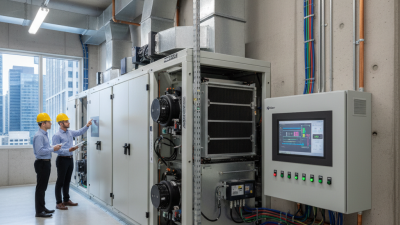
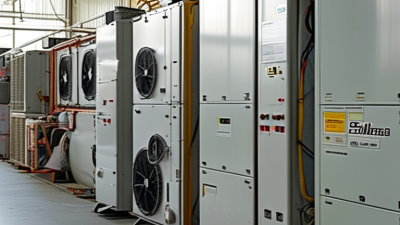
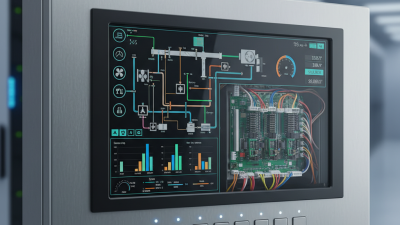
Direct Digital Controller manufacturers now sit at the center of smarter, lower-energy buildings. Their products regulate air handlers, chillers, boilers, lighting, and room conditions. A small controller can influence comfort across an entire hospital wing.
The International Energy Agency reports that buildings consume about 30% of global energy demand. Its recent buildings analysis also links operations and controls with major efficiency opportunities. The U.S. Department of Energy indicates that improved building controls can reduce energy use, although savings vary by building type and operating discipline. Market research firms, including MarketsandMarkets and Grand View Research, forecast continued growth in building automation. Their estimates differ because product definitions and regional coverage are not identical. That matters. Market size alone cannot identify the best supplier.
Interoperability, cybersecurity, commissioning support, and lifecycle service deserve closer attention. NIST building-controls specialist Steven Bushby describes BACnet as “a data communications protocol for building automation and control networks.” This principle remains practical: a Direct Digital Controller should exchange reliable data with sensors, supervisory software, and third-party equipment. Leading manufacturers worldwide increasingly support BACnet/IP, edge analytics, cloud connectivity, and open integration. Yet “open” does not always mean simple. Engineers still encounter licensing limits, weak documentation, and difficult legacy upgrades. This ranking therefore considers more than brand visibility. It examines control performance, protocol support, field experience, technical assistance, and measurable operating value. Some evidence remains incomplete, especially across privately reported installations. Readers should verify local certifications, service coverage, and total ownership costs before making a final decision.
Direct Digital Controllers: Definition and Role
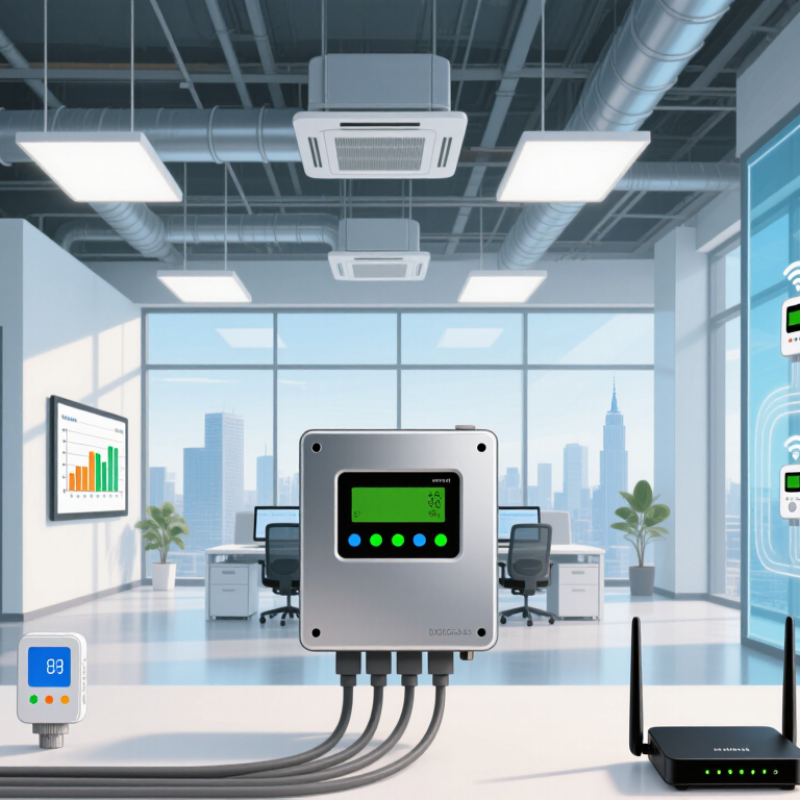
A direct digital controller, or DDC, is a computer-based device that manages building equipment automatically. It receives signals from sensors, processes programmed instructions, and adjusts connected equipment. Temperature sensors, pressure probes, and humidity detectors provide continuous operating data. The controller then sends commands to valves, dampers, fans, pumps, or heating equipment. This creates a practical control loop inside offices, hospitals, factories, and data centers.
A DDC does more than switch equipment on or off. It can maintain a room at 22°C, reduce fan speed after occupancy drops, and record unusual pressure changes. Operators can review trends, alarms, schedules, and energy readings through a local interface or supervisory network. Many manufacturers worldwide design controllers with open communication protocols, which can simplify integration across different systems. However, compatibility is never automatic. Poor sensor placement or incorrect calibration can produce unstable control, even with advanced hardware. The controller cannot correct bad field data.
It needs thoughtful programming.
Reliable operation also depends on commissioning, cybersecurity practices, and regular maintenance. A technician may discover that a damper responds slowly, or that a temperature sensor sits beside a warm light fixture. These details can distort decisions. DDC technology is powerful, but it remains dependent on accurate measurements, clear sequences, and human review. Mistakes are possible. That is why experienced engineers test each control loop under real operating conditions.

Direct digital control systems rely on several core technologies to manage buildings with precision. Microprocessors interpret temperature, humidity, pressure, and occupancy data from field sensors. The controller then compares these readings with programmed setpoints.
Control algorithms form the system’s practical intelligence. PID logic adjusts valves, dampers, fans, and heating equipment in response to changing conditions. Scheduling functions support working hours, holidays, and overnight setbacks.
Alarm engines identify abnormal values, such as a supply-air temperature that remains high after cooling starts. Trend logs provide useful evidence during commissioning and maintenance.
Communication protocols allow controllers, sensors, meters, and supervisory software to exchange information. Common open standards support interoperability, while secure networks help restrict unauthorized access.
Reliable systems need accurate calibration and clear point naming. A perfectly programmed controller still performs poorly with a drifting sensor. No dashboard can fix bad data.
Engineers should test sequences under real operating conditions, not only simulated loads. Some control logic looks efficient on paper but reacts too slowly in a crowded meeting room.
That weakness deserves review. Direct digital control is powerful, but its results depend on installation quality, documentation, and continuous verification.
Top Direct Digital Controller Manufacturers Worldwide
Evaluating global DDC manufacturers requires more than comparing product prices. Look for proven field experience in offices, hospitals, factories, and campuses. A reliable manufacturer should explain how its controllers perform under heat, network interruptions, and changing workloads. Review support for open protocols such as BACnet and Modbus. Also inspect point capacity, input accuracy, control response, and expansion options. Clear documentation matters. So does firmware discipline. Ask for test records, certification details, and realistic project references. Marketing claims can sound polished, but field evidence is harder to replace. No checklist is perfect. Your building’s operating conditions may expose weaknesses that laboratory tests miss.
Tips: Request a live demonstration with simulated sensor failures, offline networks, and alarm recovery. Check whether technicians can adjust logic without replacing hardware.
Cybersecurity should be part of the evaluation, not an afterthought. Examine password controls, secure updates, access logging, and vulnerability response procedures. Reliable suppliers provide useful training and accessible technical assistance across regions. They should also maintain spare-part availability and clear warranty terms. A five-year lifecycle plan can reveal hidden costs, including licenses, commissioning, and service visits. In my experience, the cheapest controller often becomes expensive when engineering tools are difficult to use. Still, personal experience can be limited. Compare independent testing, installer feedback, and measured energy results before making a decision.
A neutral 100-point procurement framework for comparing global DDC manufacturers without using company or brand-specific data. The criteria reflect common requirements in building automation, including BACnet interoperability, cybersecurity, scalability, reliability, analytics, lifecycle support, commissioning, and energy performance.
Evaluation reference areas include BACnet communication practices under ISO 16484-5, industrial cybersecurity principles from the IEC 62443 family, and energy-management considerations commonly addressed by standards such as ASHRAE 90.1 and EN 15232.
Leading direct digital controller manufacturers worldwide serve buildings, factories, campuses, and infrastructure projects. Their systems monitor temperature, pressure, humidity, airflow, and energy use through connected control networks. The strongest manufacturers combine dependable hardware with clear software and responsive technical support. Their controllers should operate steadily in crowded mechanical rooms, dusty plant areas, and unstable network conditions.
Practical performance matters more than impressive specifications. Buyers should examine input accuracy, protocol compatibility, cybersecurity controls, firmware updates, and replacement availability. A reliable controller can maintain a narrow temperature range while reducing unnecessary valve and fan movement. Detailed alarm logs also help technicians identify a failed sensor before occupants notice discomfort. Small details matter. Field commissioning reports often expose weaknesses that brochures never mention.
Leading manufacturers also support engineers after installation. They provide tested application libraries, wiring guidance, training, and regional service resources. However, no manufacturer gets every detail right. Some platforms remain difficult to configure, especially when older equipment joins a modern network. That limitation deserves honest review. Project teams should request live demonstrations, reference sites, lifecycle cost data, and realistic response times. A controller that looks advanced may still create avoidable maintenance work. Careful testing, documented settings, and regular operator feedback create more dependable results across different facilities and climates.
| Evaluation Dimension | Industry-Recognized Specification or Capability | Typical Direct Digital Controller Application | Why It Matters When Comparing Manufacturers | Reference Framework |
|---|---|---|---|---|
| Core Control Function | Microprocessor-based monitoring, sequencing, scheduling, alarming, data logging, and closed-loop control of building systems. | Air-handling units, rooftop units, fan-coil units, chilled-water systems, boilers, pumps, and central plant equipment. | Shows whether a controller can manage both standalone equipment and coordinated building automation strategies. | Building automation and control system practice |
| Communication Protocol Support | BACnet Modbus KNX LonTalk | Integration with supervisory software, meters, variable-speed drives, sensors, actuators, lighting systems, and third-party equipment. | Open-protocol support can reduce integration constraints and improve interoperability in multi-vendor projects. | ASHRAE 135; ISO 16484-5; ISO/IEC 14543-3; Modbus Application Protocol |
| Input and Output Architecture | Combination of universal inputs, digital inputs, analog outputs, relay outputs, triac outputs, and configurable I/O points. | Temperature, humidity, pressure, airflow, occupancy, valve, damper, fan, pump, and compressor control. | Flexible I/O reduces the need for additional expansion modules and simplifies panel design. | Common HVAC control-panel architecture |
| Control Logic | Configurable proportional-integral-derivative control, time schedules, lead-lag rotation, optimum start, reset strategies, and interlocks. | Supply-air temperature control, static-pressure reset, chilled-water reset, boiler sequencing, and equipment staging. | Advanced logic supports energy efficiency, stable comfort conditions, and reliable equipment operation. | HVAC control engineering practice |
| Network Topology | Controllers may operate on field-level networks, IP-based automation networks, or a combination of wired and wireless connections. | Small standalone buildings, distributed campuses, hospitals, airports, commercial properties, and industrial facilities. | Network flexibility affects installation cost, scalability, commissioning effort, and system resilience. | Building automation network architecture |
| Cybersecurity Capability | Role-based access, encrypted communications, secure authentication, audit logging, network segmentation, and controlled firmware updates. | Connected building management systems requiring remote access or integration with enterprise IT networks. | Cybersecurity features help reduce unauthorized access and protect operational technology environments. | IEC 62443; ISO/IEC 27001 principles; building automation cybersecurity practice |
| Interoperability | Support for standardized object models, data points, alarms, schedules, trends, and discovery functions. | Projects involving equipment and software supplied by multiple contractors or control-system vendors. | Interoperability lowers dependence on proprietary engineering tools and supports future system expansion. | BACnet interoperability concepts and open building automation practice |
| Environmental Suitability | Product selection commonly considers operating temperature, humidity, electrical noise, enclosure rating, and installation location. | Mechanical rooms, electrical panels, rooftop equipment, plant rooms, cleanrooms, and outdoor enclosures. | Environmental ratings influence service life, reliability, and the need for additional enclosure protection. | IEC 60721; IEC 60529; manufacturer installation requirements |
| Energy Management Features | Occupancy scheduling, demand control, temperature setbacks, economizer logic, load shedding, and equipment efficiency monitoring. | Commercial buildings, educational facilities, healthcare sites, retail properties, and district energy systems. | Energy-management functions allow operators to balance comfort, operational cost, and carbon-reduction targets. | ASHRAE Standard 90.1; ISO 50001 energy-management principles |
| Human-Machine Interface | Local display options, browser-based configuration, graphical supervisory interfaces, alarm dashboards, and mobile access. | Commissioning, maintenance, fault diagnosis, trend review, operator control, and remote service. | Clear visualization and diagnostics reduce troubleshooting time and improve operator productivity. | Building management system operational practice |
| Scalability | Solutions range from compact equipment controllers to distributed systems with supervisory servers and multiple network levels. | Single-zone applications through multi-building campuses and geographically distributed portfolios. | Scalability helps maintain a consistent control strategy as the facility portfolio expands. | Distributed building automation system architecture |
| Commissioning and Service Tools | Point checkout, device discovery, trend visualization, alarm history, controller backup, programming templates, and remote diagnostics. | New construction, retrofit projects, seasonal recommissioning, preventive maintenance, and fault detection. | Strong service tools can shorten commissioning time and improve lifecycle support. | Building automation commissioning practice |
| Compliance Considerations | Electrical safety, electromagnetic compatibility, environmental protection, cybersecurity, and regional communication requirements. | International projects requiring conformity assessment and documentation for local installation codes. | Documented compliance supports procurement approval, permitting, installation, and cross-border deployment. | Applicable IEC, EN, UL, and regional regulatory requirements |
| Lifecycle Support | Availability of replacement controllers, firmware maintenance, technical documentation, training, spare parts, and migration paths. | Long-life commercial and institutional facilities where controls are expected to operate for many years. | Lifecycle support can be as important as initial controller functionality when evaluating global suppliers. | Facility operations and controls lifecycle management |
Note: The table compares technology, integration, compliance, and lifecycle dimensions used to evaluate direct digital controller manufacturers worldwide; it does not rank or disclose individual company or brand data.
Direct digital controllers are moving beyond basic temperature regulation. They now coordinate HVAC, lighting, access systems, and energy meters through connected building networks. The International Energy Agency reported that buildings consumed about 30% of global final energy in 2022. This figure keeps demand high for precise, programmable control.
Industry applications are becoming more data-driven. In hospitals, controllers maintain stable air pressure and temperature across sensitive rooms. In factories, they adjust ventilation according to occupancy, heat, and production schedules. Data centers also require rapid response. The IEA’s Electricity 2024 report estimated data-center electricity use at about 460 TWh in 2022, with demand potentially exceeding 1,000 TWh by 2026. That growth will test controller reliability, response speed, and heat-management strategies.
Future development will favor open protocols, edge analytics, and stronger cybersecurity. Controllers may detect abnormal valve movement before operators notice rising energy use. They will also support predictive maintenance through local sensors and cloud platforms. However, integration remains difficult in older buildings with inconsistent wiring and undocumented settings. Small errors matter. Field technicians still find poorly labeled panels and outdated firmware during commissioning. According to the U.S. Department of Energy, advanced building controls can deliver meaningful energy savings, but actual results depend on correct installation and continuous tuning. Manufacturers should therefore publish clearer interoperability data, longer security-support periods, and practical commissioning guidance.