xzcChinese
Inquiry
Form loading...

What Are the 2026 Top Modbus TCP to BACnet Gateway Types?

As building systems become more connected in 2026, Modbus Tcp To Bacnet gateways are becoming practical bridges between industrial equipment and modern automation networks. They help meters, variable-frequency drives, pumps, and sensors communicate with BACnet building controllers. Yet gateway selection is rarely simple. A device that works well in a test cabinet may behave differently across a busy commercial network.

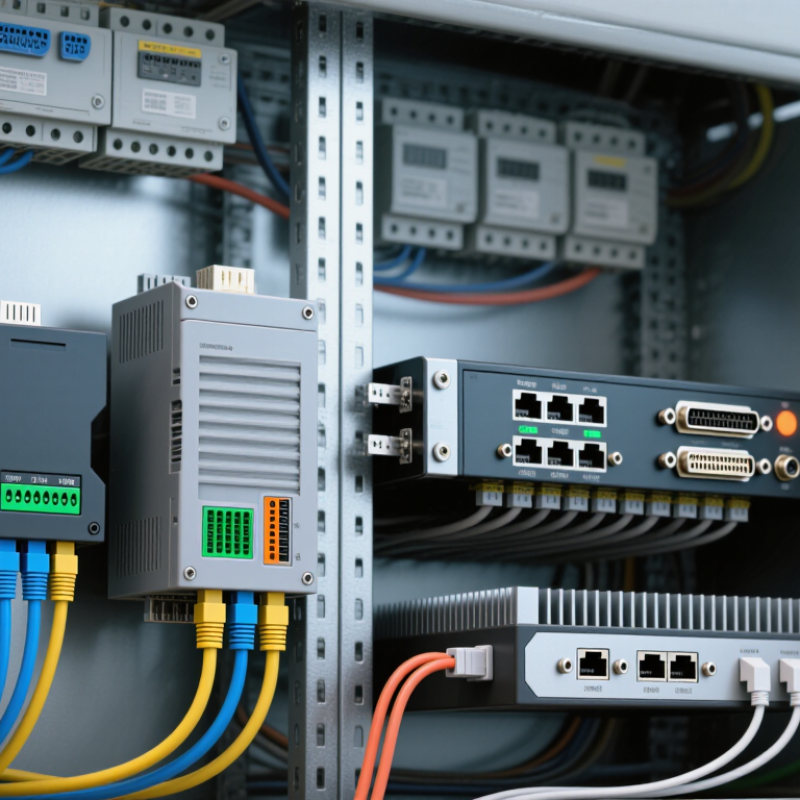
This guide examines the leading gateway types expected to attract attention in 2026. These include compact protocol converters, DIN-rail industrial gateways, high-capacity multi-port devices, and edge gateways with monitoring features. Each type serves a different installation reality. A small office may need only a few mapped registers. A hospital or campus may require detailed object handling, alarm support, reliable polling, and clear diagnostics. The physical details matter, too: terminal layout, enclosure temperature, status LEDs, and commissioning access can affect daily maintenance.

Field experience shows that compatibility claims need careful verification. Some gateways translate basic values smoothly but handle scaling, signed data, or BACnet priorities imperfectly. No gateway is perfect. Firmware quality, register documentation, network timing, and vendor support can matter more than impressive specifications. This comparison will consider communication capacity, configuration effort, security practices, interoperability, and long-term serviceability. It will also question common assumptions, because the “top” gateway type depends on the equipment, site conditions, and engineer responsible for keeping the system stable.
What Are the 2026 Top Modbus TCP to BACnet Gateway Types?

Modbus TCP to BACnet Gateway Basics and Core Functions

A Modbus TCP to BACnet gateway connects two building automation languages. Modbus TCP usually carries register values over Ethernet. BACnet organizes those values as readable objects, such as analog inputs, binary outputs, and alarms. The gateway translates both data models without forcing controllers to share the same protocol.

Common gateway types include compact DIN-rail units, panel-mounted controllers, and software-based edge gateways. DIN-rail models suit plant rooms with limited space. Panel units often provide stronger isolation and easier service access. Edge gateways can collect data from several networks, then forward selected points to a building management system. Selection depends on point count, network layout, and required redundancy.

Core functions include register mapping, data conversion, polling control, and BACnet object creation. A reliable device should support adjustable polling intervals, timeout settings, and communication diagnostics. For example, a temperature value from register 40021 may need scaling from 235 to 23.5°C. Incorrect byte order can create impossible readings. I have seen commissioning teams overlook this detail. It creates a quiet fault, not an obvious failure.

Good gateways also record connection status and failed requests. These details help technicians trace a loose cable or overloaded controller. Security still needs attention, because Modbus TCP has limited native protection. Network segmentation, controlled access, and updated firmware reduce practical exposure. Mapping should be tested point by point. Documentation is often imperfect, so engineers should verify live values before approving the system.

Key Gateway Types for Different Building Automation Needs

What Are the 2026 Top Modbus TCP to BACnet Gateway Types?

Key Gateway Types for Different Building Automation Needs

For small mechanical rooms, a standalone Modbus TCP to BACnet/IP gateway is often practical. It connects meters, pumps, and variable-speed drives to a building controller. Installation usually needs only an Ethernet cable, device addresses, and register mapping. Choose models with clear diagnostics and automatic reconnection. A quiet cabinet can still hide communication faults.

Large buildings may need multi-port or multi-protocol gateways. These devices handle many Modbus TCP segments and may also support BACnet MS/TP. They suit hospitals, campuses, and mixed-use towers with different automation zones. Local buffering helps preserve readings during short network interruptions. However, more ports create more configuration work.

Edge gateways fit sites that require local logic and data processing. They can filter energy values, convert units, and trigger alarms before sending data upstream. This reduces controller workload and supports faster responses. Secure access controls are essential, especially when gateways connect to wider networks. Some systems offer excellent dashboards but weak troubleshooting tools. That trade-off deserves attention during testing.

Embedded gateway modules work well inside packaged equipment or custom control panels. They reduce wiring and simplify factory assembly. Their limits may include fixed memory, restricted protocol features, or difficult replacement procedures. During commissioning, verify polling intervals, register scaling, BACnet object names, and fault recovery. A successful connection is not enough. Stable behavior under network delays matters more.

How Gateway Architectures Translate Modbus Data into BACnet Objects

What Are the 2026 Top Modbus TCP to BACnet Gateway Types?

How Gateway Architectures Translate Modbus Data into BACnet Objects

A Modbus TCP to BACnet gateway usually follows one of three architectures: standalone, embedded, or server-based. A standalone gateway polls meters, drives, or controllers through Ethernet. It then exposes selected values as BACnet objects.

An embedded gateway performs the same translation inside a building controller. Server-based software collects Modbus data centrally and publishes it through a BACnet interface.

The translation is not a simple label change. A holding register may become an Analog Input, Analog Value, or Binary Value object. The choice depends on whether the point is measured, commanded, or represented as a state. For example, register 40021 might contain supply temperature. The gateway scales a raw value of 235 into 23.5°C, assigns engineering units, and places it in a BACnet object. Configuration errors happen here.

Reliable architectures also manage polling intervals, register data types, byte order, and communication timeouts. A gateway may read temperature points every five seconds but poll alarms faster. BACnet clients can then discover objects through the Device object and monitor changes using COV services, when supported. Otherwise, they rely on repeated reads.

In field work, I verify each point against the equipment manual and live readings. Names alone are not enough. A reversed word order can turn 21.5°C into an impossible number. That assumption is often wrong. Some gateways also preserve Modbus quality status, while others expose only the last value. This difference deserves careful testing before commissioning.

Performance, Compatibility, and Security Factors to Compare

In 2026, the strongest Modbus TCP to BACnet gateway types will differ by application. Dedicated hardware gateways suit plant rooms with stable networks and continuous operation. Edge gateways add local processing, buffering, and alarm logic. Software gateways offer flexible deployment on virtual machines, but they depend heavily on the host system. Performance is not only about packet speed. Check polling intervals, simultaneous device capacity, memory use, and recovery time after network failures.

Tips: Test real traffic before purchase. Connect representative meters, controllers, and alarms. Watch response delays during peak polling. A gateway may pass basic values smoothly, yet struggle with larger point lists. That matters in busy buildings. Document every register and BACnet object carefully.

Compatibility requires more than matching protocol names. Verify supported Modbus function codes, data types, byte order, scaling, and BACnet object limits. Time schedules and writable points deserve special attention. Security should include encrypted management access, role-based permissions, secure updates, logging, and network segmentation. Avoid exposing the gateway directly to the public internet. In field projects, small configuration errors often create confusing symptoms. A temperature reading can appear correct while its unit, sign, or update interval remains wrong. Some gateway specifications also seem impressive but omit recovery behavior and long-term support. Ask for test records, firmware policies, and clear integration boundaries before deployment.

Step-by-Step Criteria for Choosing the Right Gateway in 2026

Modbus TCP to BACnet gateways usually fall into three types: protocol translators, edge gateways, and software gateways. Translators map registers into BACnet objects. Edge gateways add local buffering, alarms, and basic logic. Software gateways run inside a server or virtual machine. The right choice depends on network scale and control requirements.

Begin with the equipment list. Count registers, update rates, writable points, and required BACnet object types. The International Energy Agency’s Energy Efficiency 2023 report states that buildings use about 30% of global final energy. Small mapping errors can therefore create measurable waste. Check whether the gateway supports BACnet/IP, foreign-device registration, BBMD functions, and Modbus exception handling. Confirm both directions of communication. Read-only data is not enough for most control projects.

Then test network behavior. Review VLAN support, password controls, firmware updates, event logs, and time synchronization. The U.S. Department of Energy’s 2018 Commercial Buildings Energy Consumption Survey identified about 6.2 million commercial buildings in the United States. A gateway selected for one plant may fail across a distributed portfolio. Request a point-mapping sample before purchase. Test lost packets, device restarts, duplicate addresses, and slow polling. Keep spare capacity above the current point count. This is often forgotten. A perfect gateway rarely exists, and commissioning assumptions can be wrong. Check every mapped value against a live trend, not only a spreadsheet.

What Are the 2026 Top Modbus TCP to BACnet Gateway Types?

Step-by-step criteria for choosing the right gateway in 2026. The comparison below focuses on protocol capability, installation environment, scalability, cybersecurity, and lifecycle requirements rather than any specific company or brand.

Gateway Type Typical Deployment Core Modbus TCP to BACnet Function Main Advantages Common Limitations Best-Fit Project Selection Priority
Standalone DIN-Rail Protocol Gateway Mounted inside a control panel or building automation cabinet; connected to Ethernet and, where required, serial fieldbus devices. Reads Modbus TCP registers and exposes selected points as BACnet/IP objects. Many models also support Modbus RTU through an RS-485 port. Compact installation, predictable operation, low maintenance, and direct integration with a BACnet building management system. Point capacity and routing features are limited by the hardware. Advanced analytics normally require another platform. HVAC plants, meters, packaged equipment, and small-to-medium commercial buildings. High for most fixed installations
Industrial-Grade Protocol Converter Industrial control cabinets, utility rooms, manufacturing sites, and environments with vibration, temperature variation, or electrical noise. Maps Modbus TCP data to BACnet/IP and may provide isolation, redundant power inputs, extended temperature operation, and diagnostic counters. Higher environmental tolerance, stronger diagnostics, and improved availability for critical equipment. Usually costs more and may require more engineering during commissioning. Factories, district energy systems, water facilities, and mission-critical mechanical plants. High where reliability is critical
Edge Controller with Gateway Software Installed at the edge of a building or facility network with local computing, storage, and control functions. Polls Modbus TCP devices, publishes BACnet/IP objects, and can apply logic, scheduling, alarming, data buffering, or local dashboards. Combines protocol conversion with control and data processing; useful when local autonomy is required. More configuration, larger cybersecurity surface, and greater dependency on software support and updates. Large buildings, distributed campuses, energy management, and sites needing local control. High for multifunctional systems
Virtual or Software-Based Gateway Runs on a virtual machine, industrial computer, server, or approved container host within the facility or data center. Uses software drivers to poll Modbus TCP devices and publish BACnet/IP services across one or more network interfaces. Highly scalable, easy to replicate, and suitable for centralized management across multiple sites. Depends on host availability, operating-system security, network configuration, and software licensing. Multi-building portfolios, data centers, laboratories, and centralized supervisory systems. High for scalable deployments
Cloud-Connected Edge Gateway Local gateway at the facility with an outbound connection to a cloud monitoring, analytics, or asset-management service. Performs local Modbus TCP polling and BACnet/IP integration while forwarding selected data through secured outbound communications. Supports remote monitoring, fleet-level analytics, centralized alarms, and reduced need for inbound firewall access. Cloud connectivity is not a substitute for local BACnet integration; service availability and data governance must be reviewed. Distributed retail, portfolio energy management, remote facilities, and service organizations. Medium to high, depending on cloud needs
Embedded Gateway in a Controller or BMS Platform Built into a programmable automation controller, supervisory controller, or building management platform. Provides native or licensed Modbus TCP client functions and BACnet/IP server functions within the same control platform. Fewer separate devices, unified point database, centralized alarms, and easier coordination with control sequences. Creates platform dependency and may require specialized programming or engineering tools. New automation projects, integrated HVAC controls, and standardized building portfolios. High when platform standardization matters
Redundant or High-Availability Gateway Pair Critical facilities with dual power, network redundancy, standby controllers, or failover requirements. Maintains Modbus TCP polling and BACnet/IP object availability through standby operation, dual network paths, or controlled failover. Improves system availability and reduces the impact of a single gateway failure. Higher cost, more complex network design, and a need for tested failover behavior. Hospitals, data centers, airports, laboratories, and critical process facilities. High only for critical applications
Step Selection Criterion What to Verify Practical Acceptance Check Why It Matters in 2026
1 Confirm Protocol Roles Verify that the gateway can operate as a Modbus TCP client or master and as a BACnet/IP server or device. Confirm whether BACnet client functions are also needed. List every required read, write, command, alarm, schedule, and status point before selecting the device. Many integration failures occur when a gateway supports the protocols but not the required client/server direction or service type.
2 Define Point Capacity Check supported Modbus registers, coils, discrete inputs, holding registers, BACnet objects, devices, and simultaneous connections. Calculate current points plus expansion headroom. Include 32-bit values, floating-point values, status points, and command objects. Future equipment additions can exceed the gateway’s practical polling or object limits even when the initial project appears small.
3 Validate Data Mapping Review register address conventions, function codes, byte order, word order, signed values, scaling, units, and read/write permissions. Test representative values such as temperature, energy, runtime, alarm status, and writable setpoints against the source device documentation. Correct mapping prevents misleading values, reversed numbers, incorrect engineering units, and unsafe commands.
4 Check BACnet Interoperability Confirm BACnet/IP support, device instance configuration, object naming, present-value behavior, COV support where required, and alarm or schedule requirements. Use the building management system’s point-import method and confirm that objects are discoverable and writable as intended. Protocol compatibility alone does not guarantee useful BACnet behavior in a multi-vendor building automation network.
5 Assess Network Design Review IP addressing, VLANs, routing, firewall rules, BACnet broadcast management, network segmentation, and required ports. Document the gateway’s IP address, subnet, gateway, BACnet device instance, network number, and communication paths. Modern facilities commonly use segmented networks, so routing and broadcast handling must be designed rather than assumed.
6 Evaluate Cybersecurity Look for secure administration, role-based access, unique credentials, encrypted management access, firmware updates, audit logs, and unused-service controls. Require password changes, disable unnecessary services, restrict management access, and document the update and backup process. Connected gateways can expose operational networks if default credentials, open services, or outdated firmware are left unmanaged.
7 Measure Reliability Check watchdog behavior, automatic reconnection, power-loss recovery, communication timeouts, local buffering, diagnostics, and optional redundancy. Simulate a network interruption and power cycle. Confirm that polling resumes and BACnet objects return to a known state. Reliable recovery reduces service calls and prevents stale or unavailable data after routine network events.
8 Match the Physical Environment Verify mounting method, power requirements, operating temperature, humidity limits, electrical isolation, enclosure requirements, and maintenance access. Compare the installation location with the gateway’s published environmental and electrical specifications. A technically correct gateway can fail early when installed outside its rated temperature, power, or noise conditions.
9 Review Commissioning Tools Assess configuration backup, import and export options, point discovery, live diagnostics, packet or register monitoring, and change tracking. Require a saved configuration file, a point list, an as-built network diagram, and a test record before handover. Good commissioning tools shorten troubleshooting time and make future replacement or expansion easier.
10 Compare Lifecycle Cost Include hardware, licenses, engineering, network changes, firmware support, spare units, cybersecurity maintenance, and expansion costs. Estimate total cost over the expected service life rather than comparing purchase prices alone. The lowest initial price may create higher long-term costs when point growth, support, security, or specialized engineering is required.

General recommendation: For a standard building project, begin with a standalone DIN-rail gateway when the point count and network design are stable. Select an edge controller or embedded gateway when local control and analytics are required, a software gateway when centralized scalability is important, and a redundant architecture when gateway availability is critical to facility operations.