Inquiry
Form loading...
Why Use a Modbus TCP to BACnet Gateway?
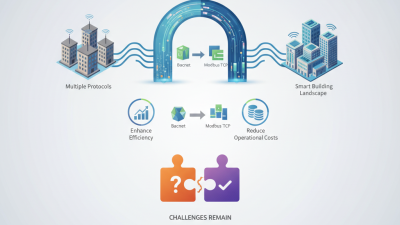
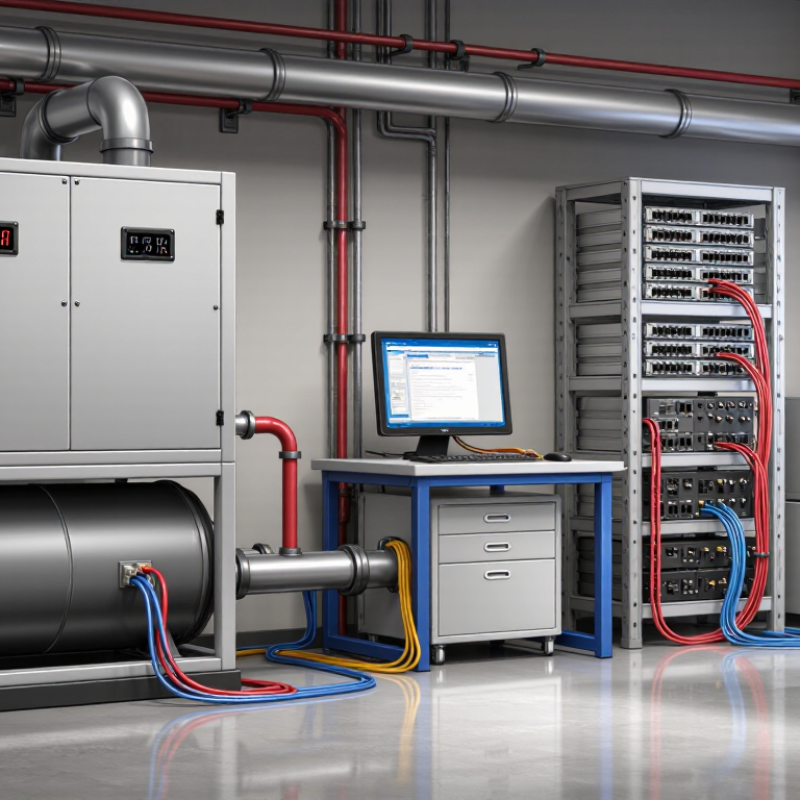
Modern buildings often contain equipment that speaks different communication languages. A chiller may expose Modbus TCP registers, while the building management system expects BACnet objects. A Modbus Tcp To Bacnet gateway creates a practical bridge between these systems. It can translate temperatures, alarms, operating states, and energy readings without replacing functioning controllers.
H. Michael Newman, author of BACnet: The Global Standard for Building Automation, describes the central goal clearly: “BACnet is designed to promote interoperability between building automation systems.” That principle explains the gateway’s value. It gives facility teams one familiar view of mixed equipment. A technician can see a pump status on a BACnet workstation, even when the pump controller remains a Modbus TCP device.
The details matter.
A reliable gateway must map registers carefully. It must preserve data types, scaling, units, and alarm behavior. For example, a value of 235 may mean 23.5°C, not 235°C. Poor mapping can create dangerous confusion, even when the network appears healthy.
Commissioning experience shows another lesson. Documentation is rarely perfect. Register tables may contain unclear offsets or outdated descriptions. Engineers should verify readings at the equipment and gateway levels. Packet captures, trend logs, and controlled command tests can expose hidden errors.
A gateway is not magic.
It cannot repair poor addressing, unstable Ethernet, or undocumented controller logic. Still, when selected and configured professionally, it can extend equipment life, reduce integration costs, and support phased modernization. The strongest design remains transparent, testable, and honest about its limitations.
Why Use a Modbus TCP to BACnet Gateway?
Modbus TCP and BACnet serve different automation needs. Modbus TCP sends simple register-based data through Ethernet and TCP/IP, commonly using port 502. It is widely used for meters, drives, controllers, and industrial equipment. BACnet is an open building-automation protocol designed for HVAC, lighting, alarms, schedules, and energy management. It represents information as meaningful objects, such as temperatures, setpoints, and occupancy states. BACnet/IP commonly communicates through UDP port 47808.
This difference matters in real facilities. A Modbus meter may report register 40112, while a BACnet system expects a readable object with units, status, and reliability. A gateway translates these structures between systems. It can connect electrical meters to a building management platform without replacing functioning field devices. The International Energy Agency reported that buildings account for about 30% of global final energy consumption. Better data integration can support tighter control, but a gateway cannot repair inaccurate sensors or poor network design. That is an easy detail to overlook.
Tips: Confirm register maps, byte order, scaling, and polling limits before commissioning. Test alarms and communication loss, not only normal values. Keep a written point list. Small mistakes become expensive when hundreds of points are mapped. Also, review cybersecurity controls for both networks. Protocol conversion improves visibility, but it does not automatically provide secure access.
| Comparison Dimension | Modbus TCP | BACnet | Why a Gateway Is Useful |
|---|---|---|---|
| Primary Purpose | A simple industrial communication protocol used to exchange process data between controllers, meters, sensors, drives, and supervisory systems. | A building automation and control protocol designed for HVAC, lighting, access control, fire systems, energy management, and related building services. | It connects industrial equipment that speaks Modbus TCP with building automation systems that expect BACnet data. |
| Communication Model | Uses a client/server model. A client sends a request, and a server returns the requested data or an exception response. | Uses an object-oriented model with services such as ReadProperty, WriteProperty, Who-Is, and I-Am. | The gateway converts request-and-register communication into BACnet objects and services. |
| Network Transport | Runs over TCP/IP, normally using TCP port 502. | BACnet/IP normally uses UDP port 47808, represented in hexadecimal as 0xBAC0. BACnet can also operate over networks such as MS/TP on RS-485. | It handles the difference between TCP-based Modbus communication and BACnet/IP or another supported BACnet network. |
| Data Representation | Data is commonly stored in coils, discrete inputs, input registers, and holding registers. A register is normally 16 bits wide. | Data is represented as objects, such as Analog Input, Analog Output, Binary Input, Binary Output, and Multi-State objects, each with properties. | It maps Modbus addresses and values to BACnet object instances and properties. |
| Typical Data Types | Boolean values, 16-bit integers, 32-bit integers, floating-point values, counters, and status codes. Multi-register values may require a defined byte or word order. | Boolean, unsigned integer, signed integer, real number, double-precision value, enumerated value, character string, date, time, and status information. | It applies configurable scaling, signedness, byte order, word order, and data-type conversion where required. |
| Device Discovery | Usually requires configured IP addresses, TCP ports, unit identifiers, function codes, and register addresses. It has no universal built-in discovery process. | Supports services such as Who-Is and I-Am for discovering BACnet devices and their network identifiers. | It presents configured Modbus devices as discoverable BACnet devices or objects. |
| Addressing | Uses device connection details and logical data addresses. Common function code ranges include coils, discrete inputs, input registers, and holding registers. | Uses device object identifiers, object types, instance numbers, and properties such as Present_Value, Units, and Status_Flags. | It maintains an address map between Modbus register locations and BACnet object identifiers. |
| Data Access | Common function codes include Read Coils, Read Discrete Inputs, Read Input Registers, Read Holding Registers, Write Single, and Write Multiple operations. | Common services include reading and writing properties, confirming device identity, subscribing to change-of-value notifications, and managing alarms. | It polls Modbus data and exposes the latest values to BACnet clients; supported gateways may also translate write commands and selected events. |
| Timing Characteristics | Data is commonly obtained through polling. Update speed depends on the number of devices, request size, network latency, and polling interval. | Supports periodic polling and, where supported by the device and implementation, change-of-value notifications and event services. | It provides a controlled polling schedule and can reduce unnecessary traffic by using change detection or caching features. |
| Typical Industrial Data | Temperature, pressure, flow, energy consumption, motor speed, valve position, alarm codes, operating modes, and equipment status. | Room temperature, setpoints, fan status, damper position, occupancy, schedules, alarms, comfort settings, and HVAC operating modes. | It makes industrial meters, controllers, and packaged equipment available to a building management system. |
| Interoperability | Widely implemented and relatively simple, but register meanings, scaling, and data formats are often specific to each device configuration. | Designed for interoperability between building automation products through standardized object types, properties, and services. | It reduces the need for custom software by providing a standardized BACnet-facing interface for Modbus devices. |
| Control Integration | Suitable for direct reading and writing of device registers when the register map and permissions are known. | Supports control through writable object properties, schedules, command priorities, and status feedback when implemented by the device. | It can expose selected Modbus control points as writable BACnet objects while preserving configured limits and access rules. |
| Scaling and Units | Scaling is often documented separately, such as a register value of 235 representing 23.5 °C. Units may not be encoded in the register itself. | Objects can include engineering units and present values as standardized properties. | It converts raw Modbus values into meaningful BACnet values with suitable units, scaling factors, and data types. |
| Fault Handling | Uses communication errors, exception responses, timeouts, and connection status to indicate problems. | Can represent reliability, status flags, event states, out-of-service conditions, and communication-related faults through object properties. | It translates communication failures and invalid data into BACnet status information so operators can identify unavailable points. |
| Security Considerations | Traditional Modbus TCP does not provide built-in encryption or authentication. Network segmentation, firewalls, VPNs, and controlled access are commonly used. | Traditional BACnet/IP also requires network security controls; secure deployments may use network segmentation and supported secure BACnet mechanisms. | It should be placed in a properly segmented network and configured with restricted access, secure management, and only the required communication paths. |
| Main Integration Challenge | Register maps may use different address conventions, scaling rules, byte orders, and undocumented device-specific meanings. | The building automation system expects correctly defined object types, instances, properties, units, priorities, and status behavior. | A configurable mapping table bridges register-level data and BACnet object-level data without replacing the existing equipment. |
| Best-Fit Application | Industrial automation, energy meters, variable-speed drives, power equipment, packaged machines, and process instruments. | Building management, HVAC supervision, lighting coordination, energy monitoring, room control, and facility-wide automation. | It is appropriate when a facility must integrate industrial or energy equipment into a BACnet-based building management environment. |