Inquiry
Form loading...
Choosing the right Bacnet Bms is not simply a matter of comparing software screens or counting supported devices. A reliable decision begins with the building’s actual operating conditions. Consider the number of controllers, the age of the HVAC equipment, network topology, alarm requirements, and the skills of the maintenance team. A system that looks impressive in a sales demonstration may become confusing at 7 a.m., when a technician needs to find a failed air-handling unit quickly.
Steven T. Bushby, a respected BACnet authority and former chair of the ASHRAE BACnet committee, has stated, “BACnet is a standard, not a product.” That distinction matters. BACnet provides communication rules, but vendors still differ in integration quality, cybersecurity practices, graphics, licensing, and long-term support. Buyers should request a live demonstration using realistic devices, not only a polished presentation. Test trend logs, schedules, alarm routing, user permissions, and controller replacement procedures. Ask how the platform handles older BACnet equipment and intermittent network faults.
Experience often exposes what specifications hide. A small office may need simplicity more than hundreds of dashboards. A hospital or campus may require redundancy, detailed audit trails, and careful commissioning. No platform is perfect. Even a well-designed Bacnet Bms can disappoint if point names are inconsistent or documentation is incomplete. The strongest choice balances open communication, practical usability, verified interoperability, and dependable local expertise. Look beyond the feature list. Judge the system by what happens during a fault, an upgrade, or an ordinary maintenance call.
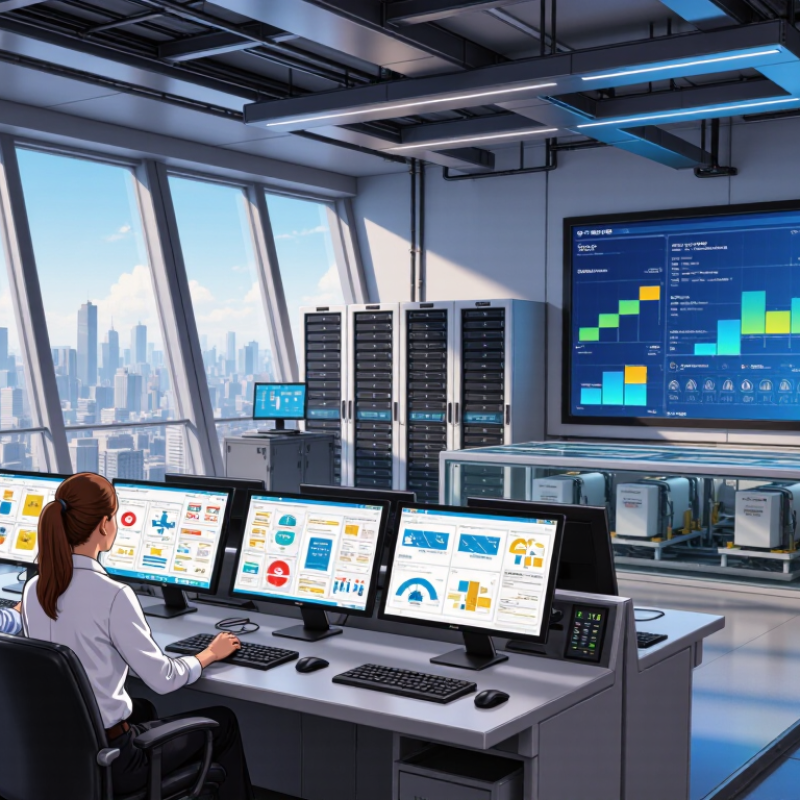
Choosing the right BACnet BMS starts with your building’s actual automation needs, not a feature list. Define the spaces, operating schedules, comfort targets, and maintenance problems first. A hospital may require dependable alarming and air-pressure control. A small office may need simple HVAC scheduling and energy dashboards.
The International Energy Agency reports that buildings consume about 30% of global final energy and produce roughly 26% of energy-related emissions. These figures make energy visibility important, but efficiency should not weaken occupant comfort. List every required data point, including temperature, humidity, airflow, occupancy, alarms, and meter readings. Then identify response times, user permissions, cybersecurity controls, and future expansion needs. BACnet compatibility alone is insufficient. The system must exchange useful data consistently across controllers, sensors, and supervisory software. This is where projects often become imperfect: teams specify points carefully, but forget who will use them at 6 a.m. during an alarm.
Tips: Walk through the building before writing the specification. Photograph control panels and record sensor locations. Ask operators to describe their daily work. Keep critical alarms separate from informational trends. Test sample data during commissioning, not only after installation.
ASHRAE Standard 135 defines BACnet communication requirements, but it does not define your operational priorities. Create measurable acceptance tests, such as alarm delivery within two minutes or verified temperature trends every five minutes. The U.S. Department of Energy estimates that buildings represent about 40% of national energy use, so even small control errors deserve attention. Leave room for revision. Real buildings rarely behave exactly like drawings.
| Selection Dimension | Key Requirement | Recommended Planning Value | Why It Matters | How to Verify Before Purchase | Priority |
|---|---|---|---|---|---|
| Building Profile | Building type and operating model | Define occupancy, operating hours, critical areas, tenancy model, and expansion plans | A BMS must reflect the building’s control strategy, staffing model, energy objectives, and operational risks. | Prepare an approved sequence of operation for HVAC, lighting, metering, alarms, and after-hours control. | High |
| System Scale | Number of sites, buildings, floors, equipment units, and data points | Calculate the current point count and reserve at least 20% capacity for future expansion | Licensing, controller capacity, database sizing, graphics performance, and network design depend on system scale. | Request documented limits for controllers, devices, points, users, alarms, trends, and concurrent sessions. | High |
| BACnet Interoperability | Support for BACnet device profiles and interoperability functions | Select a system whose supported BACnet functions match the required equipment and workflows | BACnet compatibility is not limited to the protocol name; supported services and object types determine practical interoperability. | Review the vendor’s current PICS and BIBB documentation, then test representative third-party devices. | High |
| Network Connectivity | BACnet/IP, BACnet MS/TP, and routed-network requirements | Use BACnet/IP for Ethernet networks where appropriate; retain MS/TP support for existing field buses | Existing controllers, network infrastructure, distance, segmentation, and migration requirements influence protocol selection. | Confirm supported baud rates, routing behavior, device discovery, BBMD requirements, and network segmentation options. | High |
| Cybersecurity | Secure access, account control, encryption, logging, and backup | Use role-based access, unique accounts, audit logs, secure remote access, and scheduled backups | BMS servers and controllers can affect critical building services and should be managed as operational technology. | Check support for BACnet/SC where required, secure transport, multifactor authentication options, patch procedures, and security logs. | High |
| HVAC Control | Control of air-handling units, chillers, boilers, pumps, terminal units, and ventilation | Map each sequence of operation to inputs, outputs, setpoints, modes, safeties, and overrides | Clear control logic reduces commissioning problems and ensures that equipment operates according to design intent. | Demonstrate occupied/unoccupied modes, optimum start, lead-lag rotation, reset strategies, interlocks, and failure handling. | High |
| Energy Management | Metering, benchmarking, schedules, setpoint optimization, and load management | Trend electricity, gas, water, thermal energy, and major end uses at suitable intervals | Energy improvement requires reliable data, consistent time settings, meaningful aggregation, and actionable analytics. | Confirm meter integration, unit conversion, interval data storage, dashboards, baseline comparison, and export functions. | High |
| Alarms | Alarm generation, prioritization, routing, acknowledgement, and escalation | Define alarm priorities, deadbands, delay timers, recipients, escalation paths, and alarm shelving rules | Well-designed alarm management helps operators focus on actionable conditions instead of repeated nuisance notifications. | Test alarm annunciation, acknowledgement, comments, timestamps, notification delivery, escalation, and alarm-history reports. | High |
| Scheduling | Calendar, exception, holiday, and temporary override functions | Support weekly schedules plus exceptions for holidays, events, maintenance, and tenant requirements | Schedules are central to comfort, energy savings, and operational consistency. | Test daylight-saving changes, holiday calendars, local overrides, schedule priority, and automatic expiration of temporary commands. | High |
| Trends and History | Historical storage for values, statuses, alarms, commands, and user activity | Set sampling intervals according to the variable; retain high-resolution data for commissioning and analysis | Historical data supports fault diagnosis, energy verification, compliance reporting, and performance optimization. | Confirm storage duration, sampling options, time synchronization, graphing, filtering, aggregation, and CSV/API export. | High |
| Graphics and Usability | Operator dashboards, floor plans, equipment graphics, navigation, and mobile access | Provide role-based views with consistent navigation from site level to equipment and point level | Usable graphics shorten response time and reduce training requirements for operators and facility staff. | Run a practical operator test: locate an alarm, inspect a point, change an authorized setpoint, and restore normal operation. | Medium |
| Third-Party Integration | Integration with lighting, access control, fire systems, elevators, meters, and other platforms | Use open, documented interfaces and define which system remains the source of truth for each data type | Integration prevents isolated systems and enables coordinated sequences such as occupancy-based HVAC control. | Check BACnet, web services, REST APIs, MQTT, Modbus, or other required interfaces and test data ownership and failure behavior. | High |
| Reliability | Controller autonomy, server resilience, power protection, and recovery | Field controllers should maintain essential local control during temporary supervisory-network loss | Local control reduces the impact of server, network, or communication interruptions on critical building functions. | Simulate network loss, server restart, controller restart, power recovery, clock synchronization, and database restoration. | High |
| Commissioning | Point-to-point checkout, functional testing, trend validation, and issue tracking | Require a documented commissioning plan with test scripts and acceptance criteria | Correct hardware and software configuration does not guarantee that the installed sequences perform as intended. | Require point lists, signed functional tests, trend evidence, resolved defect logs, and final as-built documentation. | High |
| Maintainability | Documentation, training, spare parts, firmware management, and service access | Define training sessions, documentation deliverables, support response targets, and lifecycle procedures | A maintainable system preserves value after handover and reduces dependence on undocumented specialist knowledge. | Confirm delivery of control drawings, point schedules, network diagrams, backups, passwords, licenses, training records, and maintenance guides. | Medium |
| Future Expansion | Scalability for additional buildings, controllers, points, users, and integrations | Define a three- to five-year expansion forecast and include spare network, panel, and software capacity | Planning for growth avoids expensive replacement or disruptive migration when the building portfolio expands. | Request a capacity model showing expansion limits, upgrade paths, license impacts, database growth, and migration procedures. | Medium |
| Total Cost of Ownership | Hardware, software, engineering, licensing, commissioning, training, and support costs | Compare the complete lifecycle cost over at least five years, not only the initial purchase price | Low initial cost can be offset by recurring licenses, proprietary integrations, difficult maintenance, or limited expansion. | Request a transparent cost breakdown for installation, annual support, upgrades, integrations, backups, training, and future additions. | High |