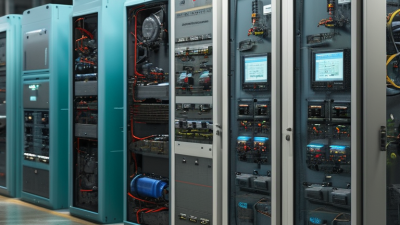
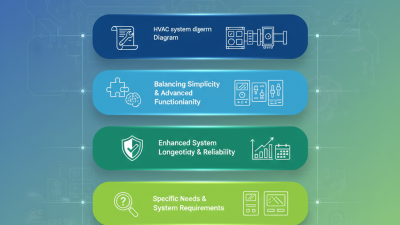
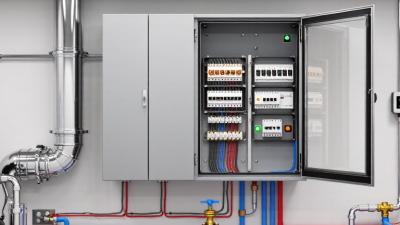
Choosing among the 7 Best HVAC DDC Panels for Global Buyers requires more than comparing point counts or enclosure sizes. A reliable Hvac Ddc Panel must translate temperature, pressure, airflow, and occupancy data into stable action. It should also support open communication protocols, secure remote access, clear alarms, and replacement flexibility.
The International Energy Agency reports that buildings consume about 30% of global final energy. The IEA also identifies space cooling as one of the fastest-growing sources of electricity demand. The 2023 Global Status Report for Buildings and Construction, published by UNEP and the GlobalABC, confirms the sector’s significant energy and emissions burden. These findings make controls important, not decorative. A poorly tuned damper can waste energy every hour.
David Sellers, P.E., a respected HVAC controls engineer and author of HVAC Control Systems, states, “The sequence of operation is the most important part of a control system.” That principle deserves attention. A powerful panel cannot rescue unclear logic, weak sensors, or incomplete commissioning. Not every global project needs the same architecture. A small hotel may need compact I/O and simple scheduling, while a hospital requires redundancy, trending, and documented fail-safe behavior.
This guide compares seven panels through practical criteria, including interoperability, expansion capacity, cybersecurity features, commissioning support, and lifecycle cost. Market forecasts from MarketsandMarkets indicate continued growth in building automation systems, but forecasts are not guarantees. Buyer conditions differ. Regional standards, installer skill, network infrastructure, and spare-parts access can change the final decision. The best Hvac Ddc Panel is therefore not always the most expensive one. It is the panel that remains understandable, serviceable, and dependable after installation.
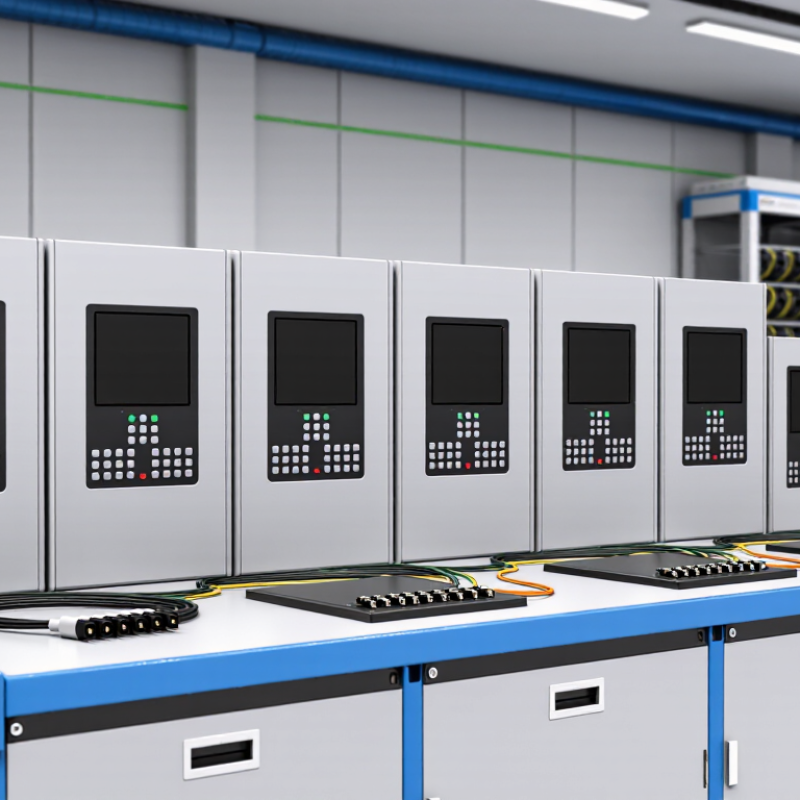
A direct digital control panel is the decision center of an HVAC system. It receives sensor data, compares conditions with programmed setpoints, and adjusts equipment automatically. A typical panel includes a processor, input and output modules, power supplies, communication ports, and terminal connections. Sensors monitor temperature, humidity, pressure, airflow, and carbon dioxide. Actuators then position dampers, valves, and variable-speed drives.
The International Energy Agency reports that building operations consume about 30% of global final energy and produce roughly 26% of energy-related emissions. Better control is therefore more than a convenience.
DDC functions include scheduling, supply-air temperature control, static-pressure reset, demand ventilation, alarm handling, and trend recording. Reliable panels also support open communication protocols and clear fault messages. Small errors matter. A drifting sensor can create simultaneous heating and cooling. Poorly written sequences can waste energy while appearing normal.
The 2023 UNEP Global Status Report for Buildings and Construction estimated that buildings represented about 34% of global energy demand. This strengthens the case for commissioning and regular verification.
In field work, however, a sophisticated panel does not guarantee efficient operation. I have found that unclear points lists and rushed tuning often undermine good hardware.
Global buyers should examine I/O capacity, cybersecurity provisions, service access, documentation, and local technical support. They should also request trend logs, not just attractive specifications. A careful review may reveal limitations before installation.

Global DDC panel selection begins with standards, not appearance. The best panel must communicate reliably with existing equipment and local building systems. Look for BACnet/IP, BACnet MS/TP, and Modbus RTU or TCP support. Protocol flexibility reduces replacement costs during phased upgrades. Confirm whether each protocol is native or requires an extra gateway. That detail matters.
Seven panel profiles often suit international projects:
Each profile serves a different scale. A small hotel room does not need the same hardware as a hospital chiller plant. Field experience shows that spare communication ports and clear terminal labels save hours during commissioning.
Check regional compliance before ordering. Voltage, frequency, EMC performance, enclosure ratings, and operating temperature must match the installation site. CE, UKCA, UL-related requirements, IEC references, and RoHS documentation may be requested by consultants or authorities. Cybersecurity deserves equal attention. Ask about password control, secure updates, network separation, and user logging. Do not trust a generic compliance statement.
A practical test is better. Connect a sample panel to your intended sensor, valve actuator, and supervisory software. Confirm alarm handling and trend accuracy. I have seen technically capable panels fail because their points list was poorly mapped. No checklist is perfect. Leave room for site conditions, installer skill, and future changes.
Selecting a DDC panel starts with the building, not the catalog. Panel One suits small air-handling units with basic temperature control and compact I/O. Panel Two adds larger relay capacity for pumps, valves, and fan starters. Panel Three supports BACnet/IP, making it practical for modern supervisory networks. Panel Four combines BACnet MS/TP with flexible universal inputs. This helps contractors reuse existing field wiring. Panel Five offers stronger trend logging for chilled-water systems. Panel Six focuses on modular expansion. Panel Seven is designed for dense I/O in hospitals, campuses, and industrial facilities.
Core technical differences matter during commissioning. Check input accuracy for sensors near 0°C and 50°C. Confirm output resolution before controlling modulating valves. A panel may advertise many points but still lack useful isolation. Network recovery also deserves attention. Some systems restart quickly after communication loss, while others need manual investigation. I have seen a technically capable controller fail because its terminal labels were unclear. Small details create expensive delays.
Cybersecurity should include role-based access, secure passwords, and controlled firmware updates. Local standards, electrical ratings, and communication requirements must be verified before purchase. I once compared only processor speed and overlooked service access. That was a poor method. Technicians need readable diagnostics, removable terminals, and event logs at the panel. A reliable choice balances control capacity, protocol support, documentation quality, and the skills available on site.
For global buyers, the seven best HVAC DDC panels are not simply the fastest or cheapest. Connectivity determines long-term value. Support for BACnet/IP, BACnet Secure Connect, Modbus, and open APIs reduces integration barriers. ASHRAE Standard 135 defines BACnet as a common building automation communication framework. Still, protocol support alone proves little. Test point discovery, alarm routing, and cybersecurity controls matter more during commissioning.
Programming quality also affects operating risk. Look for graphical logic, reusable sequences, remote backups, and clear change logs. A skilled technician should adjust a morning warm-up sequence without rewriting the entire application. Scalability is equally practical. A panel should manage one air-handling unit today, then expand across multiple floors without replacing the architecture. The IEA reports that buildings account for about 30% of global final energy use. Small control errors can therefore create persistent costs. I have seen “flexible” systems become expensive after undocumented custom code was added.
Tips: Request a live interoperability test before purchase. Measure network recovery time, controller replacement time, and technician training hours. Compare lifecycle costs, not only the panel invoice. NIST Handbook 135 recommends including energy, operation, maintenance, replacement, and residual costs in lifecycle analysis. Ask for five-year scenarios with realistic labor rates and spare parts. Firmware support is often overlooked. It should not be. A low-cost controller with short support coverage may create avoidable migration work. Also examine data ownership, export formats, and remote access permissions. Global projects face different networks, skills, and service conditions. That makes a perfect ranking difficult. It also makes transparent assumptions essential.
| Anonymous Panel Profile | Typical HVAC Application | Field Connectivity | Supervisory Connectivity | Typical I/O Capacity | Programming & Logic | Scalability | Cybersecurity & Serviceability | Indicative Hardware Cost (USD) |
Indicative 10-Year Lifecycle Cost (USD) |
Best-Fit Buyer |
|---|---|---|---|---|---|---|---|---|---|---|
| Profile 1 Compact IP Controller |
Small AHUs, rooftop units, heat pumps, and compact commercial buildings | BACnet MS/TP, Modbus RTU, universal analog and binary I/O | BACnet/IP over Ethernet; optional secure remote access through a gateway | Approximately 20–40 physical points; expansion modules commonly available | Graphical function blocks, schedules, alarms, PID loops, trend logs, and calendar exceptions | Suitable for one building or small distributed sites; limited by local controller and network architecture | Good Role-based access, password protection, replaceable terminal blocks, and standard network diagnostics |
$900–$2,000 | $4,000–$9,000 | Small facilities seeking low panel cost and straightforward commissioning |
| Profile 2 Modular Building Controller |
Medium-sized offices, schools, retail buildings, and multi-zone air-handling systems | BACnet MS/TP, Modbus RTU, Lon-compatible options, universal I/O, and relay outputs | BACnet/IP, HTTPS web interface, and integration with supervisory workstations | Approximately 40–120 points with modular I/O expansion | Drag-and-drop programming, reusable control sequences, PID control, optimum start, and demand limiting | Supports multiple controllers per site and can be extended with remote I/O modules | Good Firmware management, audit logs, segmented networks, and replaceable expansion modules |
$1,800–$4,500 | $8,000–$20,000 | Global buyers needing a balanced price, capacity, and serviceability profile |
| Profile 3 High-I/O Plant Controller |
Central plants, large AHUs, boiler rooms, chiller plants, and district-energy interfaces | BACnet MS/TP, Modbus RTU/TCP, pulse inputs, high-density analog I/O, and dedicated safety interlocks | BACnet/IP, OPC UA or gateway-based enterprise integration, and plant-level dashboards | Approximately 100–300 points per panel, depending on I/O module selection | Advanced sequencing, lead-lag rotation, staging, plant optimization, reset strategies, and extensive alarming | High; multiple panels and remote I/O networks can be coordinated across a large mechanical system | High Network isolation, backup and restore, user permissions, event logs, and service-port controls |
$4,000–$10,000 | $18,000–$45,000 | Owners prioritizing plant optimization, redundancy, and long-term engineering flexibility |
| Profile 4 Open-Protocol Retrofit Panel |
Modernization of legacy controls in hospitals, campuses, hotels, and public buildings | BACnet MS/TP, Modbus RTU/TCP, configurable serial ports, and broad signal compatibility | BACnet/IP, REST or MQTT through an edge gateway, and integration with existing BMS platforms | Approximately 30–100 points; designed for mixed legacy and new equipment | Graphical programming with protocol mapping, data normalization, alarm translation, and custom point conversion | High for phased retrofits because existing field devices can often be retained | Good Gateway security, network segmentation, documented point mapping, and remote diagnostics |
$2,500–$7,000 | $10,000–$28,000 | Projects where reducing rewiring, downtime, and stranded legacy assets is important |
| Profile 5 Cloud-Connected Edge Panel |
Multi-site retail, distributed facilities, light industrial buildings, and portfolio monitoring | BACnet MS/TP, Modbus RTU/TCP, wireless sensor options, and local I/O | BACnet/IP plus encrypted outbound HTTPS, MQTT, or VPN connectivity to a cloud platform | Approximately 20–80 local points with cloud aggregation from multiple panels | Local schedules and control loops continue during internet outages; cloud analytics support alarms and reporting | Very high across geographically distributed sites, provided network and subscription services remain available | High Encrypted communications, signed updates where supported, multi-factor access at the platform level, and centralized user management |
$1,500–$5,000 plus service fees | $9,000–$30,000 plus recurring connectivity fees | Organizations managing many small sites with limited local engineering staff |
| Profile 6 Industrial-Grade PLC-Based Panel |
Mission-critical HVAC, process ventilation, cleanrooms, data centers, and utility facilities | Ethernet/IP or industrial Ethernet options, Modbus TCP/RTU, BACnet gateway support, and hardwired safety circuits | OPC UA, BACnet/IP gateway, SCADA integration, and redundant Ethernet options on selected architectures | Approximately 50–500 points, depending on the PLC rack and distributed I/O configuration | IEC 61131-3 languages such as ladder logic, function block, and structured text; supports deterministic sequences | Very high; distributed I/O, redundant components, and multiple network segments can be engineered for large systems | Very high Defined user roles, controlled engineering access, diagnostic buffers, backup images, and industrial network controls |
$6,000–$20,000 | $30,000–$90,000 | Buyers requiring high availability, predictable control execution, and formal maintenance procedures |
| Profile 7 Enterprise Supervisory DDC Panel |
Large campuses, airports, universities, healthcare networks, and smart-building portfolios | BACnet MS/TP, BACnet/IP, Modbus RTU/TCP, meters, variable-frequency drives, and packaged-equipment interfaces | Redundant BACnet/IP networks, OPC UA or API integration, enterprise databases, and centralized BMS supervision | Approximately 80–250 local points with practically unlimited site-level expansion through networked controllers | Advanced graphical programming, reusable libraries, analytics, fault detection, demand response, and energy optimization | Very high Designed for multi-building, multi-site, and phased expansion strategies |
Very high Network zoning, certificate-based security where supported, centralized audit trails, backup servers, and lifecycle firmware planning |
$8,000–$25,000 | $40,000–$120,000 | Enterprise owners that value standardization, analytics, and centralized operational governance |
Choosing among seven capable HVAC DDC panels starts with climate and building behavior.
The IEA’s Energy Efficiency 2023 report states that buildings consume about 30% of global final energy. They also create roughly 26% of energy-related emissions. That scale makes control quality more important than a crowded feature list.
Hot, humid offices need dew-point protection, variable-air-volume logic, and accurate outdoor-air sensing.
Cold campuses need freeze protection, staged heating, and careful valve sequencing.
Dry climates benefit from demand-controlled ventilation and night-purge strategies.
Commissioning experience shows that interoperability can outweigh raw input and output counts. Select open protocols, documented points lists, and secure remote access. This is often overlooked.
Hospitals need redundant sensors, alarm histories, and fail-safe sequences.
Schools need simple schedules and clear local overrides.
Data centers require fast alarming, network resilience, and stable temperature loops.
The UNEP Global Status Report for Buildings and Construction reports that buildings and construction used 34% of global energy and produced 37% of energy-related emissions in 2022. A panel should support measurable savings, not only attractive graphics. I have seen excellent hardware underperform because sensors were poorly placed.
Tips: