Inquiry
Form loading...
Choosing the 2026 best Direct Digital Controller requires more than comparing catalog prices. Global buyers need dependable control, clear documentation, and practical support after installation. A controller may look impressive on a specification sheet. Real performance appears in a mechanical room, beside noisy fans and fluctuating temperatures.
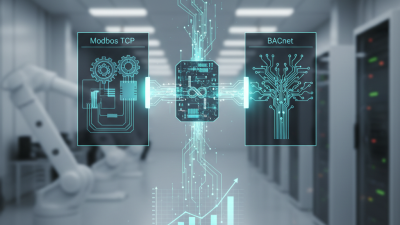
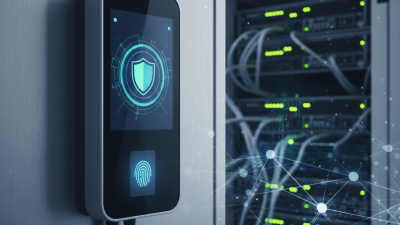
Steven T. Bushby, a recognized building automation specialist at the National Institute of Standards and Technology, emphasizes a vital principle: “Interoperability is more than communication; it requires shared meaning.” This idea matters when evaluating BACnet, Modbus, IP connectivity, sensors, and supervisory software. A device should exchange useful data, not merely display a connection status. It should also support secure updates, role-based access, reliable trend logs, and straightforward commissioning. These details often separate a stable system from an expensive troubleshooting exercise.
The strongest global choice depends on the building, region, and operating team. Local voltage, climate, language, spare-parts access, and technician training can change the result. A compact controller may suit a small office, while a larger facility may require distributed I/O and redundant communication. Price still matters. It should not dominate the decision. A cheaper unit can create higher labor costs later. That warning deserves attention.
No ranking is perfect. Product availability changes. Firmware quality can vary. Even respected brands may deliver uneven field experiences. This guide therefore examines measurable specifications, integration capability, cybersecurity practices, lifecycle value, and user feedback. The goal is practical guidance for buyers who need reliable automation, not impressive marketing language.
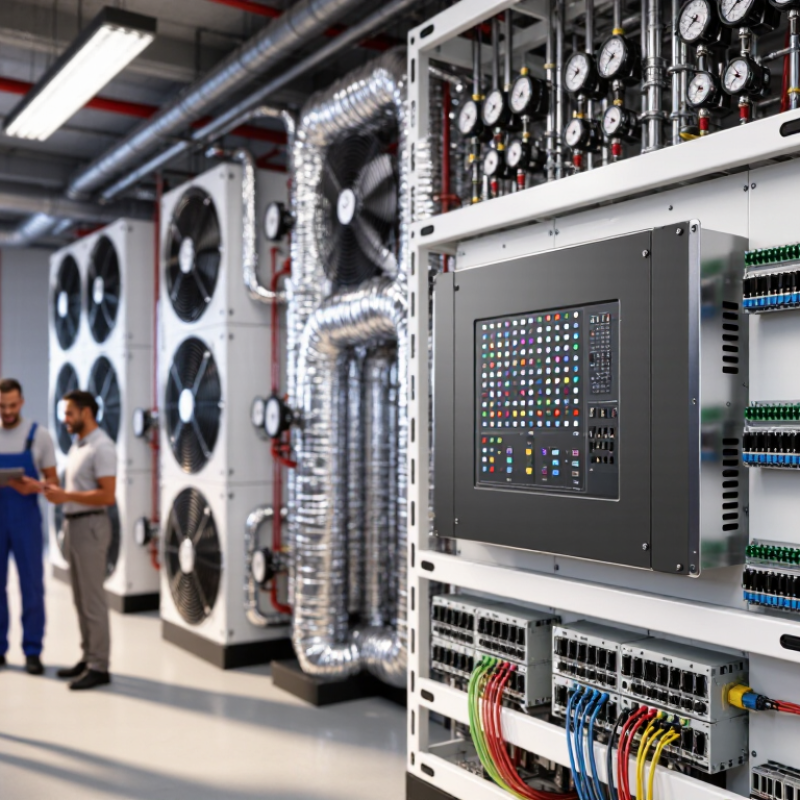
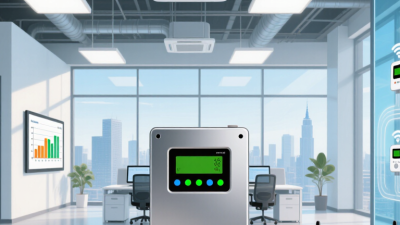
For global buyers, a Direct Digital Controller (DDC) is the working brain of a building automation system. It reads sensors, processes programmed logic, and controls equipment such as air handlers, pumps, valves, and lighting relays. Unlike basic time switches, a DDC can adjust operations from live conditions. It may respond to room temperature, pressure, humidity, occupancy, or alarm status.
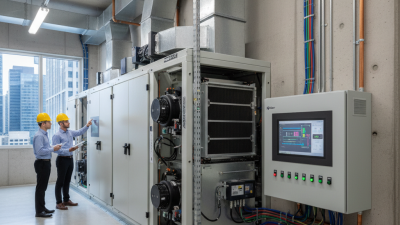
A typical DDC architecture has field sensors, input and output modules, a controller, communication networks, and supervisory software. Analog inputs measure changing values, while digital inputs detect simple states, such as on or off. Outputs then command actuators, relays, or variable-speed drives. Core functions include scheduling, setpoint control, alarm handling, trend recording, interlocking, and energy optimization. During commissioning, technicians should verify each point physically. A mislabeled sensor can create a perfect-looking but incorrect control sequence. That risk is easy to underestimate.
Tips: Check voltage, protocol compatibility, point capacity, cybersecurity features, and local service support before purchase. Request clear wiring diagrams and tested control sequences. Make sure the controller can operate safely if communication fails. A lower-cost unit may become expensive when spare parts or engineering support are unavailable. Buyers should also review regional electrical standards and documentation quality. Not every “universal” controller integrates smoothly; real-site testing remains essential.
| Architecture or Function | What It Does | Typical Inputs and Outputs | Communication Methods | Main Advantages | Important Considerations | Typical Applications |
|---|---|---|---|---|---|---|
| Standalone DDC Controller | Executes programmed control logic locally without requiring continuous communication with a central workstation. | Temperature, humidity, pressure, flow, occupancy, status, alarm, and energy-meter signals; relay, analog, and actuator outputs. | Hardwired I/O; optional local service port or limited peer communication. | Local operation, simple deployment, and continued control during supervisory-network interruptions. | Limited system-wide coordination, trending, remote access, and centralized alarm management. | Small air-handling units, packaged equipment, pumps, fans, and isolated mechanical rooms. |
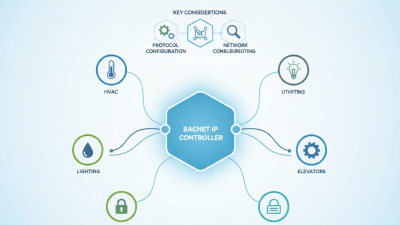
| Networked DDC Controller | Provides local control while exchanging points, schedules, alarms, and operating data with other controllers and a supervisory platform. | Mixed physical I/O, virtual points, calculated values, schedules, alarms, and equipment status. | Common building-automation protocols include BACnet/IP, BACnet MS/TP, Modbus TCP, and Modbus RTU, depending on the installation. | Scalable control, centralized monitoring, cross-system coordination, and shared operating data. | Requires careful network design, addressing, protocol configuration, and cybersecurity controls. | Commercial buildings, campuses, hospitals, schools, hotels, and industrial facilities. |
| Supervisory DDC Architecture | Uses a supervisory server or workstation to coordinate controllers, provide graphics, manage schedules, store trends, and handle alarms. | Aggregated controller points, alarms, trends, schedules, setpoints, energy data, and operator commands. | IP-based building-automation networks, secure remote access, and protocol gateways where required. | Central visibility, historical analysis, reporting, scheduling, and coordinated plant optimization. | A supervisory outage can affect visibility and centralized functions even when local controllers continue basic control. | Large buildings, multi-building sites, central plants, and facilities requiring operational reporting. |
| Distributed Control Architecture | Distributes control intelligence among multiple local controllers rather than depending on one central control processor. | Local and shared sensors, actuators, equipment states, interlocks, calculated values, and plant operating parameters. | Controller-to-controller communication over wired or IP networks, with supervisory integration. | Fault containment, modular expansion, local resilience, and reduced control-panel wiring. | Requires consistent point naming, network segmentation, time synchronization, and coordinated sequence design. | Central utility plants, chilled-water systems, airside systems, and complex facility automation. |
| Edge-Connected DDC Architecture | Combines local real-time control with edge-level data processing, protocol conversion, analytics, or secure remote connectivity. | Controller points, equipment data, derived performance metrics, alarms, and data prepared for higher-level applications. | Local automation protocols plus secure IP connections to supervisory, analytics, or enterprise systems. | Reduces dependence on continuous cloud connectivity and supports data normalization near the equipment. | Requires defined data ownership, secure remote access, update management, and compatibility testing. | Multi-site portfolios, energy-monitoring projects, retrofit programs, and connected facilities. |
| Sensor and Signal Processing | Reads field measurements, validates signals, applies scaling or filtering, and converts raw values into usable control variables. | Thermistors, resistance-temperature detectors, voltage signals, current signals, dry contacts, pulse inputs, and communication values. | Hardwired I/O and network data points, subject to controller compatibility. | Improves control stability and supports reliable monitoring of environmental and equipment conditions. | Sensor placement, calibration, wiring polarity, signal range, grounding, and noise immunity affect accuracy. | All HVAC, lighting-interface, metering, and equipment-monitoring systems. |
| Control Logic and Sequencing | Uses programmed rules, loops, schedules, interlocks, and equipment sequences to maintain desired operating conditions. | Setpoints, enable commands, proportional-integral-derivative variables, staging commands, reset values, and operating modes. | Runs locally in the controller; selected values may be shared through the automation network. | Provides repeatable automatic operation and can coordinate comfort, safety, and energy objectives. | Poorly defined sequences, excessive overrides, or incorrect tuning can reduce comfort and increase energy use. | Temperature control, pressure control, ventilation, plant sequencing, and equipment lead-lag rotation. |
| Actuator and Equipment Control | Sends commands to valves, dampers, relays, variable-speed drives, and other controlled devices. | Binary commands, floating outputs, modulating voltage or current outputs, and network-based commands. | Direct output wiring or network integration with compatible equipment. | Enables precise regulation of airflow, water flow, temperature, pressure, and equipment operation. | Output type, actuator fail position, electrical loading, response time, and manual override design must be verified. | Air-handling units, terminal units, pumps, fans, boilers, chillers, dampers, and valves. |
| Alarm, Trend, and Event Management | Detects abnormal conditions, records selected operating values, and presents events for maintenance or operational response. | High and low limits, equipment failures, sensor faults, runtime values, energy readings, and acknowledgement status. | Local storage, controller network, supervisory workstation, or secure notification service. | Supports troubleshooting, preventive maintenance, compliance documentation, and performance analysis. | Alarm priorities, deadbands, retention periods, and notification rules must be configured to avoid nuisance alarms. | Facilities requiring fault visibility, energy review, maintenance planning, or operational accountability. |
| Scheduling and Optimization | Adjusts equipment operation according to occupancy, time of day, season, demand, or operating priorities. | Calendar schedules, occupancy states, optimum start and stop values, reset schedules, and demand signals. | Controller-resident schedules or supervisory schedules distributed to local controllers. | Can reduce unnecessary runtime while maintaining required comfort and process conditions. | Schedules must reflect actual occupancy, seasonal changes, holidays, override policies, and safety requirements. | Offices, educational buildings, retail facilities, hotels, and mixed-use properties. |
| Selection Criteria for Global Buyers | Defines whether a DDC solution is suitable for the project’s control complexity, local standards, lifecycle requirements, and operating environment. | Required I/O count and types, operating temperature, power supply, enclosure needs, expansion capacity, and service requirements. | Required protocols, physical media, IP capability, gateway needs, interoperability, and secure remote-access requirements. | Improves project fit, commissioning quality, maintainability, and long-term integration potential. | Confirm local electrical rules, environmental ratings, language support, documentation, spare-parts availability, training, and cybersecurity practices. | New construction, modernization, retrofit, multi-site standardization, and critical-facility automation. |
Note: Actual capabilities depend on the selected controller model, installed firmware, network design, field devices, applicable standards, and project-specific programming.