Top 5 Ip Access Controllers You Need to Know About?
In today's fast-paced world, security is paramount. An "Ip Access Controller" plays a crucial role in ensuring safety and efficiency. Experts emphasize the importance of these systems. "The right access control can redefine security strategies," says Dr. Michael Zheng, a renowned expert in security technology.
Choosing an effective Ip Access Controller can be daunting. Numerous options exist, each boasting unique features. It's essential to understand what fits your needs best. The key is not just to pick a popular device but to evaluate reliability and performance. A well-chosen system protects your premises while offering flexibility.
While various controllers stand out, it’s not easy to find the perfect one for every situation. Users often overlook fundamental factors, leading to less secure environments. Reflecting on your needs and limitations is vital. A great Ip Access Controller should not only serve today’s requirements but also adapt to tomorrow’s challenges.

Understanding IP Access Controllers: An Overview
IP access controllers are essential for securing both physical and digital spaces. These devices manage who can enter restricted areas or access specific networks. They can operate independently or integrate with existing security systems. Understanding their functionalities is crucial for effective implementation.
Many IP access controllers utilize biometrics or card readers for validation. Some offer remote management capabilities, allowing users to control access from anywhere. Monitoring real-time access logs contributes to enhanced security. However, selecting the right controller can be challenging considering the variety of options available. Different environments may require tailored solutions.
Investing in IP access technology is wise. Yet, potential vulnerabilities exist. Regular updates and maintenance are vital for ensuring reliability. Users must also address privacy concerns and data protection associated with biometric data. These complexities highlight the importance of thorough research and expert consultation when choosing an IP access controller.
Key Features to Consider When Choosing an IP Access Controller
When selecting an IP access controller, several key features should guide your decision. First, the scalability of the system is crucial. A report by MarketsandMarkets indicates that the IP access control market is expected to grow by over 10% annually. This highlights the increasing need for scalable solutions that can grow with your organization.
Additionally, user-friendly interfaces can enhance efficiency. Many systems today come with intuitive dashboards and mobile access, allowing users to manage their security from anywhere. However, organizations often overlook this aspect, leading to frustration and inefficiencies.
Integration capabilities also matter significantly. The ability to seamlessly connect with existing security systems, such as video surveillance, is essential. A study from Security Management reveals that organizations spending more on integration experience a 30% improvement in security incident response time. Ensuring your system can integrate well saves time and enhances the overall security architecture. These considerations are vital for making an informed choice about IP access controllers.
Top 5 Recommended IP Access Controllers for Various Needs
In today’s digital landscape, IP access controllers play a crucial role in security management. These systems offer businesses a seamless solution for monitoring and controlling access to sensitive areas. According to a report by MarketsandMarkets, the global access control market is projected to grow from $8.3 billion in 2022 to $11.1 billion by 2027. This significant growth underscores the increasing importance of effective access control solutions.
When exploring the best IP access controllers, consider various needs. For smaller businesses, a simple, user-friendly system may suffice. In contrast, larger enterprises might require advanced features like biometric authentication. Some systems provide integration with cloud services. This flexibility allows organizations to scale their security measures according to their needs. However, the complexity of some solutions can overwhelm users, pointing to a need for better training and user support.
Moreover, the effectiveness of these controllers depends on their implementation. Poor installation can lead to vulnerabilities. A study from the Security Industry Association suggests that 32% of companies experience access control failures due to misconfigurations. Regular assessments and updates are necessary to ensure these systems function optimally. This highlights the importance of continuous improvement and adaptation in security strategies. Implementing IP access controllers can significantly enhance security when done correctly.
Top 5 Recommended IP Access Controllers for Various Needs
| Rank |
Model |
Key Features |
Suitable For |
Price Range |
| 1 |
Model A |
Multi-door support, Remote access, User-friendly interface |
Large enterprises, Office buildings |
$500 - $700 |
| 2 |
Model B |
Cloud management, Mobile app, Time tracking |
Small to mid-sized businesses |
$300 - $500 |
| 3 |
Model C |
Biometrics, High security, Offline capability |
High-security areas, Government buildings |
$800 - $1200 |
| 4 |
Model D |
Integration with CCTV, Reports generation, Easy installation |
Retail stores, Warehouses |
$400 - $600 |
| 5 |
Model E |
Mobile credentials, Flexible access levels, Cost-effective |
Home users, Small offices |
$150 - $250 |
Comparative Analysis of Performance and Security of Leading Models
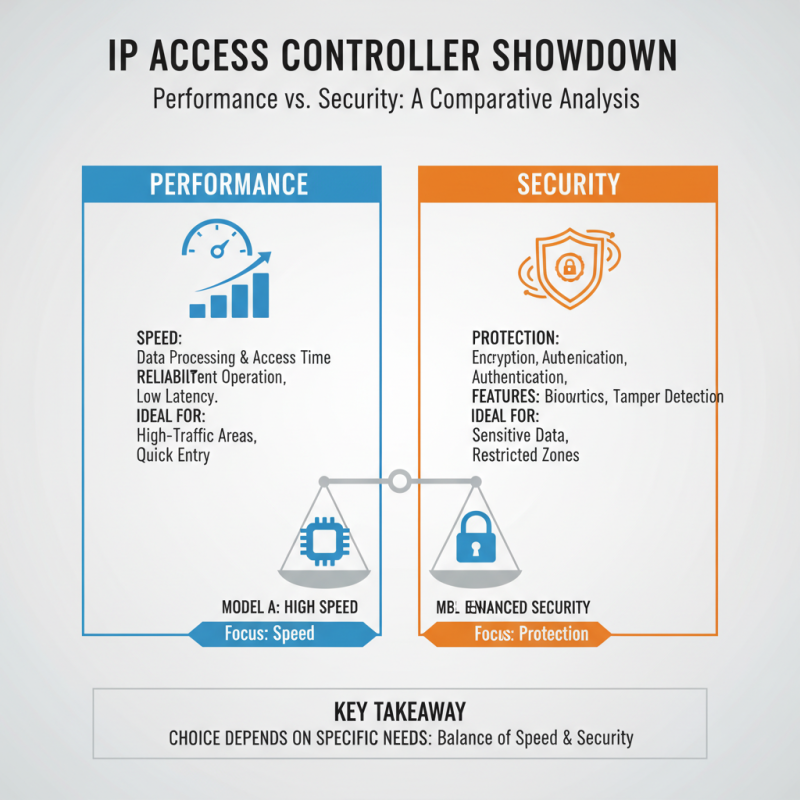
In today's digital landscape, IP access controllers are essential for managing security. They vary significantly in performance and reliability. A comparative analysis reveals that while some models excel in speed, others prioritize security features. This divergence means that the right choice often depends on specific needs.
Many leading models offer impressive user authentication methods. Biometric scanning has become more common, providing a secure layer. However, this technology does have limitations. Some users find the scanning slow or inconsistent. Additionally, software vulnerabilities may expose systems to risks, requiring constant updates.
A close look at integration capabilities is also necessary. Some controllers work seamlessly with existing security systems. Meanwhile, others may require extensive setup efforts. This can lead to frustration among users aiming for efficiency. Ultimately, understanding the balance between performance and security is crucial in choosing the right IP access controller.
Future Trends in IP Access Control Technology
The landscape of IP access control technology is evolving rapidly. Innovations aim to enhance security while improving user experience. Future trends suggest a strong emphasis on cloud-based solutions. These solutions provide flexibility and remote management capabilities. More companies are adopting them for real-time monitoring.
Another significant trend is the integration of artificial intelligence. AI can analyze patterns in access behavior. This can help identify potential security threats more proactively. Companies will increasingly rely on AI-driven systems to make informed decisions. However, this technology also brings challenges. Data privacy concerns need careful consideration.
Mobile access control is on the rise. Users prefer the convenience of smartphone applications. This trend may lead to greater vulnerabilities if security measures aren't robust. Additionally, organizations must find ways to educate staff on best practices. The balance between convenience and security will be crucial in the future. Embracing these trends offers opportunities, but caution is necessary.