Top 10 BACnet to Modbus TCP Gateways for Global Buyers
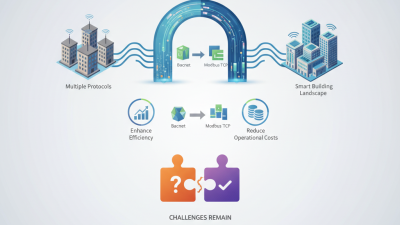
Connecting BACnet building automation systems with Modbus TCP equipment can be harder than it looks. A gateway may need to translate device objects, register values, and communication timing without disrupting daily operations. Bacnet To Modbus Tcp gateways help bridge these systems, but their capabilities differ. Some support straightforward point mapping. Others offer configuration tools, diagnostics, and broader protocol options. Small details matter.
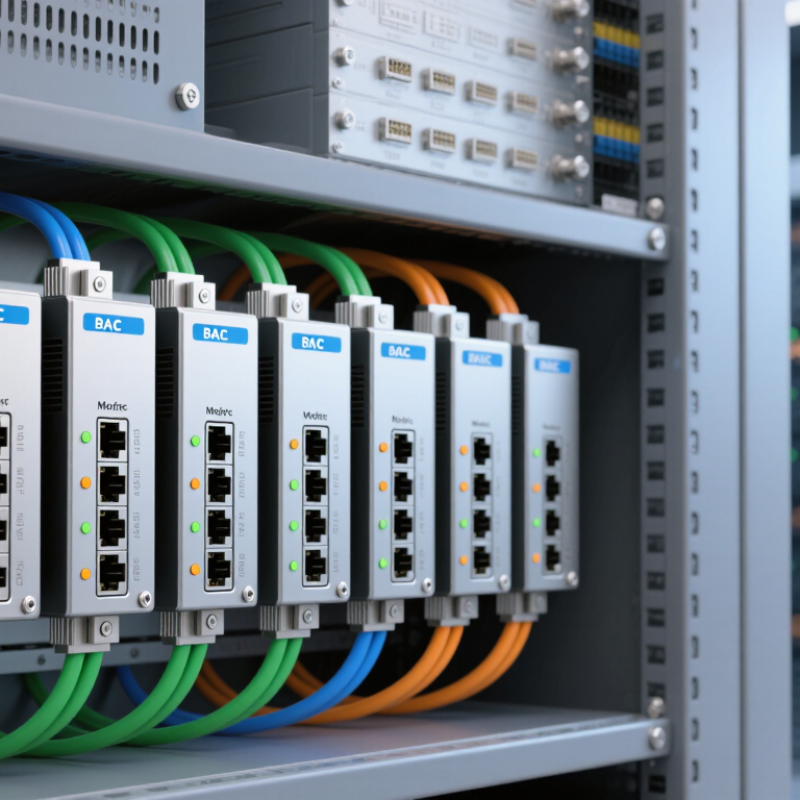
A useful comparison should look beyond product names and headline features. Check supported BACnet services, Modbus register types, Ethernet settings, point capacity, and commissioning requirements. A clear configuration interface can save time when mapping temperature sensors, pump status, or alarm points. Reliable documentation matters too. So does accessible technical support. Buyers should confirm compatibility with their specific controllers and software, rather than assume every gateway handles every installation. That assumption can be costly.
This Top 10 guide examines gateways for global buyers, with attention to practical selection factors and real project constraints. It aims to help facility teams, integrators, and engineers shortlist suitable devices. Not every model will fit every site. Regional availability, firmware revisions, and network design can change the decision. Even a well-reviewed product may require careful testing before deployment. That deserves thought. The rankings should inform comparison, not replace a review of project requirements, vendor specifications, and commissioning results. A gateway is a small component, yet its mapping choices can affect how operators interpret building data. When those choices are unclear, troubleshooting gets slower. A little caution helps.
Protocol Basics: BACnet/ASHRAE 135 and Modbus TCP’s Registered Port 502
BACnet and Modbus TCP represent different ways to describe and exchange building data. BACnet, standardized as ASHRAE 135, models equipment through objects and properties. A room sensor might expose a device object and an analog input for temperature. Modbus TCP instead reads or writes coils and registers, so the gateway must translate meaning—not just bytes.
The transport details matter. The Internet Assigned Numbers Authority (IANA) registers TCP port 502 for Modbus. The Modbus TCP implementation guide specifies a seven-byte MBAP header; the application protocol specification sets a maximum PDU size of 253 bytes. These figures help engineers check packet captures and avoid oversized messages. BACnet’s object model and services are defined in ASHRAE 135, while device profiles and interoperability guidance help clarify what equipment actually supports. Small details matter.
In practice, map each BACnet property to a documented Modbus register, including units, scaling, access rights, and update rate. For example, a temperature value stored as 21.6 °C may be transmitted as 216, requiring a scale factor of 0.1. BACnet change-of-value reporting does not automatically become equivalent Modbus behavior; polling intervals need deliberate configuration. One caveat: a tidy register table can still conceal inconsistent units between devices. Test with live readings. Check port access, timeouts, and reconnect behavior during commissioning, then compare gateway values against the source equipment.
How Gateways Map BACnet Objects to Modbus Registers
A gateway does not simply copy BACnet objects into Modbus addresses. It assigns selected object properties to register locations and defines how each value is encoded. For example, an Analog Input’s Present_Value might map to a Modbus input register. At 0.1°C resolution, a reading of 23.6°C could appear as 236. Short and clear. But clients need the scale and units to interpret it correctly. Binary states may use discrete inputs or coils, while multistate values can map to integer registers. Writable points require particular care: a BACnet commandable object may have priority behavior that a basic Modbus register cannot represent.
For each point, document the BACnet object type and instance, property, Modbus address, function code, data type, scaling, and access direction. Specify signedness and byte or word order for values spanning two registers. A controller showing a plausible number can still be wrong if its register offset or word order differs. I would also verify mappings against live readings, not only configuration exports. Slightly awkward, but useful. Test communication-loss behavior too: stale values should not look like fresh measurements, and unsupported states need a defined representation. These details are easy to overlook during commissioning.
Top 10 BACnet to Modbus TCP Gateways: How BACnet Objects Map to Modbus Registers
This vendor-neutral chart shows the typical number of 16-bit Modbus registers used to expose the Present_Value of common BACnet object types. Analog and accumulator values are commonly represented as 32-bit values using two registers, while binary and multi-state values usually fit into one register. Actual addressing and byte order depend on gateway configuration.
Key Selection Criteria: Protocol Support, Point Capacity, and Network Security
Top 10 BACnet to Modbus TCP Gateways for Global Buyers
When comparing gateways, protocol support must match real building operations. BACnet/IP, BACnet MS/TP, and Modbus TCP cover different network layers. A gateway should preserve object types, writable properties, alarms, and data units during conversion. Ask for tested interoperability records, not only protocol logos. Small errors can distort temperature, pressure, or energy readings.
Point capacity needs practical testing. A 500-point gateway may struggle when polling rates, trend logs, and alarm traffic increase. Check maximum BACnet objects, Modbus registers, scan intervals, and simultaneous client sessions. Also examine memory behavior after a power cycle. In my experience, advertised capacity often reflects ideal conditions. It deserves skepticism. A commissioning test with 10% spare capacity is safer than buying for today’s exact count.
Network security now deserves equal weight. Verizon’s 2024 Data Breach Investigations Report reported a 180% increase in vulnerability exploitation for initial access. IBM’s Cost of a Data Breach Report 2024 placed the global average breach cost at US$4.88 million. These figures are not gateway-specific, but they sharpen the risk calculation.
Look for TLS support, role-based access, signed firmware, secure remote access, audit logs, and unused-port controls. NIST SP 800-82 Rev. 3 also stresses that operational technology must protect safety, reliability, and performance. A gateway with strong encryption can still fail operationally if updates interrupt HVAC control. Security needs testing under load, not just a checklist.
Top 10 BACnet-to-Modbus TCP Gateways Compared for Global Buyers
Top 10 BACnet-to-Modbus TCP Gateways Compared for Global Buyers
This comparison evaluates ten gateway categories using protocol support, point capacity, latency, cybersecurity, diagnostics, and commissioning effort.
BACnet devices commonly expose schedules, alarms, and room temperatures, while Modbus TCP systems often require clear register mapping.
The best gateway should translate both directions without hiding status details. Small screens help during panel testing. Web access helps remote teams.
The energy case is practical. The International Energy Agency’s 2023 Buildings report states that buildings consume about 30% of global final energy.
Reliable data exchange can reduce wasted heating, cooling, and ventilation. Each gateway was considered for response time, Ethernet stability, firmware maintenance, and documentation quality.
Secure account controls matter. So does recovery after a power interruption.
Real projects are less tidy.
Legacy controllers may use inconsistent object names or incomplete register tables. A gateway can pass data correctly yet still confuse operators. That weakness deserves attention.
Buyers should test alarm priority, time synchronization, read-only points, and cable recovery before purchase.
Regional approvals, operating temperature, and local technical support also influence the ranking. A low-cost unit may win on price but lose during commissioning.
Performance claims should be verified with a live panel, not only a datasheet.
Deployment Checklist: Addressing, Testing, and Commissioning the Gateway
Top 10 BACnet to Modbus TCP Gateways for Global Buyers
Deployment Checklist: Addressing, Testing, and Commissioning the Gateway
Gateway commissioning starts with a disciplined point list, not the hardware box. Record each BACnet device instance, object type, and present value. Then map every point to its Modbus register, unit ID, data type, and scaling rule. Confirm whether values use zero-based or one-based addressing. This small detail causes many failed tests. Check byte order too. A temperature may require swapped words, especially with 32-bit values.
The IEA reports that buildings consume about 30% of global final energy. Reliable control data therefore affects real operating costs. Before connecting the gateway, reserve its IP address and document subnet, gateway, DNS, and TCP port settings. Disable unused services where possible. NIST SP 800-82 Rev. 3 recommends separating industrial control networks and controlling remote access. Do not place the gateway directly on an unmanaged public network.
Tips: Test three points first. Choose one binary, one integer, and one floating-point value. Change a safe command locally, then verify the response at the supervisory system. Compare timestamps and units. A value that looks correct may still be stale or incorrectly scaled. I have seen commissioning teams approve a system because the screen displayed numbers. That was not enough. Capture packet logs, alarm responses, power-cycle recovery, and communication loss behavior. Allow time for retesting; the first test sheet is rarely perfect. Review unused registers again before handover. Controls reports often emphasize efficiency, but poor mapping can quietly defeat it.