2026 How to Optimize Your Direct Digital Control System For HVAC Efficiency?
In modern HVAC systems, a Direct Digital Control System for HVAC plays a crucial role in efficiency. This technology enhances the comfort of occupants and reduces energy consumption. However, improper setup can lead to inefficiencies and increased costs. Many systems struggle with inconsistencies.
Fine-tuning your Direct Digital Control System for HVAC can yield significant benefits. Simple adjustments can lead to major improvements. Regular monitoring is essential. You might find areas that waste energy or create discomfort. Addressing these issues can be a challenge but is necessary for optimal performance.
In the quest for efficiency, users often overlook the importance of calibration. Misconfigured sensors may lead to incorrect readings. This affects the entire system's performance. Reflecting on these aspects will guide you towards a more efficient HVAC system. Understanding how to optimize your controls can ultimately lead to better energy management and savings.
How Direct Digital Control Systems Enhance HVAC Energy Efficiency
Direct Digital Control (DDC) systems significantly boost HVAC energy efficiency. These systems utilize real-time data to adjust heating, ventilation, and air conditioning outputs. According to the U.S. Department of Energy, optimized DDC can lead to energy savings of 20-30%. This translates to considerable cost reductions over time.
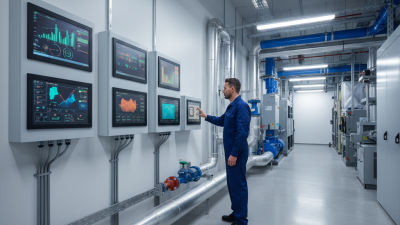
Beyond efficiency, DDC systems offer enhanced monitoring capabilities. Building managers can track system performance and detect inefficiencies quickly. However, many installations still rely on outdated control methods. This can result in wasted energy and increased operational costs. An Energy Star report highlights that nearly 35% of commercial buildings do not use advanced DDC systems.
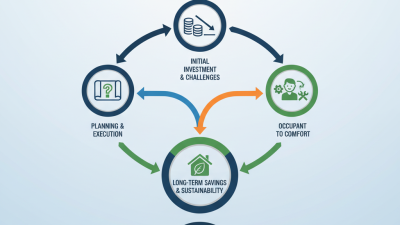
While the potential benefits are clear, the implementation of DDC is not without challenges. Inconsistent data integration and an upskilling gap in workforce training can impede optimal performance. Continuous evaluation and adaptation in lighting, temperature, and air quality systems are essential. Failing to do so may lead to diminished returns on investment. Transitioning to DDC requires learning from past inefficiencies to fully realize energy savings.
Key Performance Indicators for Evaluating HVAC System Efficiency
Key performance indicators (KPIs) are essential for evaluating HVAC system efficiency. They provide measurable values that help in assessing performance. Energy consumption, operational costs, and system reliability are crucial KPIs. Monitoring these can yield vital insights. A recent study indicated that optimizing HVAC systems can reduce energy usage by up to 30%.
Temperature control is another key indicator. Maintaining optimal indoor temperatures can enhance comfort and productivity. A slight deviation can lead to discomfort, impacting performance. A report suggested that a 1°F increase in cooling set-point could save 3–5% on energy consumption. This shows the importance of precise control.
Another critical metric is system responsiveness. Delays in HVAC reaction time can cause inefficiencies. Reactive systems often lag behind, leading to overcooling or overheating. An analysis found that systems with a response time over 10 minutes can waste up to 20% more energy. Assessing and improving response times can lead to significant savings. Emphasizing these KPIs is vital to optimizing your HVAC efficiency effectively.
2026 HVAC System Efficiency Optimization
This chart illustrates the optimization of key performance indicators (KPIs) in HVAC systems over time. The data showcases the annual percentage improvements in energy efficiency, temperature control accuracy, and response time of the HVAC system from 2020 to 2026.
Strategies for Fine-Tuning Sensor Inputs in DDC HVAC Systems
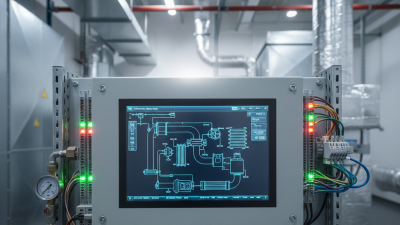
Optimizing sensor inputs in Direct Digital Control (DDC) HVAC systems is crucial for improving efficiency. Sensors are the eyes and ears of the system. They detect temperature, humidity, and other critical factors. However, inaccurate readings can lead to inefficient operations. For instance, a temperature sensor that reads high can cause unnecessary cooling. This not only increases energy costs but also affects comfort levels.
Calibration is essential. Regularly checking sensor accuracy can prevent significant issues. Sensors should be placed in locations that accurately represent the environment. A poorly positioned sensor can create hot or cold spots. This misalignment results in uneven temperature distribution. Simple adjustments can lead to remarkable improvements in performance.
Data analysis is another vital strategy. Collecting and reviewing sensor data helps identify trends. Identifying anomalies can reveal underlying problems. Sometimes, the system might react poorly to sensor inputs. Adjusting the control strategy can address these flaws. Fine-tuning the system ensures it responds accurately. Each minor adjustment contributes to overall efficiency and performance.
Integrating Renewable Energy Sources with DDC for Sustainable HVAC Systems
Integrating renewable energy sources into direct digital control (DDC) systems can greatly enhance HVAC efficiency. Solar panels and wind turbines generate clean energy. When combined with DDC systems, they optimize energy usage. Intelligent algorithms can manage when to rely on renewable energy. However, this integration is not without challenges. Sometimes, energy availability fluctuates, affecting HVAC performance.
Balancing energy supply with demand is complex. DDC systems must adapt to these variations. They can prioritize renewable energy but may require manual oversight. Energy storage solutions are also essential. Batteries can store excess energy for later use. This adds another layer of complexity but can improve overall efficiency.
Furthermore, not every building can easily switch to renewable sources. Some locations lack the necessary infrastructure. Others face financial constraints. It’s important to consider these factors when designing a system. DDC systems should be flexible and scalable. They must accommodate different energy sources and building types.