The rapid growth of smart building technologies has led to increased interoperability challenges. Many businesses face the need to connect diverse systems. Among these, converting Bacnet to Modbus TCP stands out as a significant task. This transition is crucial for seamless communication between various automation systems.
Understanding the intricacies of Bacnet To Modbus TCP conversion requires specialized knowledge. Both protocols serve unique purposes but can complement each other effectively. The complexities arise during the integration phase. In many cases, companies struggle with data format discrepancies and device compatibility. Moreover, the reliability of data transfer is essential for efficient operations.
Despite the challenges, a successful conversion can greatly enhance operational efficiency. The right approach involves understanding the technical requirements and potential pitfalls. Companies may need to invest in training or consult experts. Reflection and continuous improvement are vital in this process. By acknowledging difficulties, one can pave the way for successful integration strategies.

Bacnet and Modbus TCP are foundational protocols used in building automation.
Bacnet, developed by ASHRAE, focuses on interoperability in intelligent buildings. It allows diverse devices to communicate, promoting energy efficiency and occupant comfort.
According to a recent study by MarketsandMarkets, the building automation market is expected to grow from $79.57 billion in 2023 to $130.57 billion by 2028.
This growth is driven by the need for better systems integration and energy management, highlighting the importance of standards like Bacnet.
In contrast, Modbus TCP is widely utilized in industrial applications. It is simpler and faster than Bacnet, making it ideal for real-time data exchange.
A report from Grand View Research indicates that the global Modbus market is anticipated to mirror this growth trend.
However, while Modbus TCP excels in straightforward device communication, it lacks the extensive features found in Bacnet. This gap may lead to challenges when integrating devices across systems.
Both protocols have their strengths and weaknesses.
Bacnet’s complexity can require significant expertise to implement correctly.
Modbus TCP's simplicity might result in limitations for advanced applications.
Evaluating these aspects is crucial for effective protocol conversion strategies. Understanding these nuances helps in making informed decisions for a seamless integration process.

When converting BACnet to Modbus TCP, identifying key requirements is essential for a smooth process. Begin by understanding the devices involved. Every device may have unique communication needs. Assessing these requirements will help you map the points where the protocols diverge. Properly documenting the specifications can prevent potential issues during conversion.
Tip: Conduct a thorough analysis of current systems. Gather data about device types and their functions. This step is crucial for understanding what needs to be converted.
Consider latency and bandwidth. Modbus TCP may behave differently under varying network conditions. It’s wise to simulate these scenarios before finalizing your conversion plan. Test various configurations to see how they perform. If results seem inconsistent, revisit your conversion settings.
Tip: Engage with industry professionals. Their insights can refine your approach. Familiarize yourself with common pitfalls they’ve faced. Learning from others can save time and resources.
Converting BACnet to Modbus TCP requires a clear step-by-step approach. Start by identifying the system requirements. Assess existing BACnet devices and data types. This step is crucial for ensuring compatibility. According to a report by the International Society of Automation, over 30% of building management systems still rely on legacy protocols like BACnet. Thus, integration is vital to maintain efficiency.
Next, you need to utilize reliable middleware or gateways. Research indicates that the right gateway can reduce protocol translation errors by up to 60%. This not only streamlines communication but also enhances the data integrity of the system. Remember, during integration, some data loss may occur. This inconsistency can stem from misconfigured parameters during conversions.
Lastly, test the system thoroughly. Perform data validation checks to ensure accurate data capture. Industry statistics show that 25% of integration projects fail due to inadequate testing. This step ensures all converted data aligns with operational expectations. Each detail matters. Working closely with experienced technicians can help avoid pitfalls in this complex process. The transition can reveal hidden efficiencies, but it demands attention and careful planning.
Converting BACnet to Modbus TCP can be complex. Many face common challenges that can stall progress. One significant issue is data mapping. Ensuring that data points align correctly between the two protocols is crucial. This often requires deep knowledge of both systems. Misalignment can lead to loss of vital information. It may also cause operational inefficiencies.
Another challenge is network latency. BACnet and Modbus TCP have different packet sizes and communication speeds. This discrepancy can create delays in data transmission. One effective solution is optimizing the network configuration. By adjusting timeout settings, you can reduce wait times. Testing the system before going live is essential. It helps identify potential bottlenecks.
Compatibility issues can also arise. Some devices may not support both protocols equally. This can lead to limited functionality. Conducting thorough research on device capabilities is important. Utilize robust simulation tools to test the configurations. Such tools can help identify unaddressed vulnerabilities in the system. Each conversion project will have unique hurdles. A proactive approach can mitigate these risks effectively.
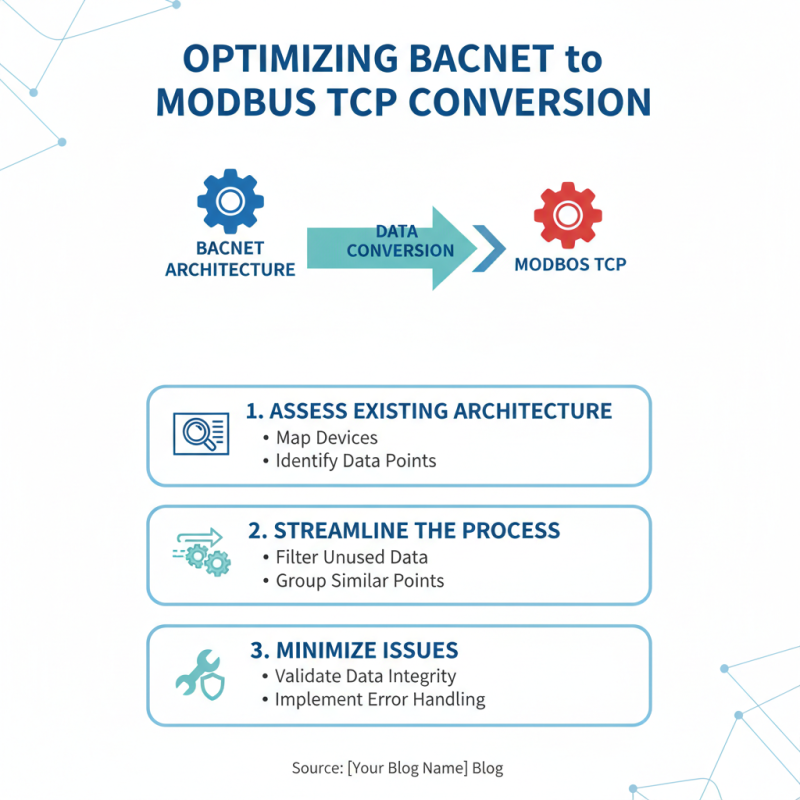
When converting Bacnet to Modbus TCP, following best practices can significantly improve efficiency. Start by assessing your existing Bacnet architecture. Identify the devices and data points that need conversion. This helps in streamlining the process and minimizing potential issues.
Utilizing efficient mapping strategies is crucial. Create a clear map of Bacnet objects to Modbus registers. Consider how data types translate between the two protocols. This may require detailed documentation to avoid mistakes. Be mindful of the limitations of each protocol during this mapping phase. It can be confusing if not addressed properly.
Testing is a vital part of the conversion process. Ensure that every aspect works as intended. Run simulations to identify possible discrepancies. Regularly revisiting your conversion strategy can reveal gaps that need attention. Overlooking these areas might lead to inefficiencies in the long run. Strive for clarity throughout the process, and embrace feedback from your team to refine the approach.