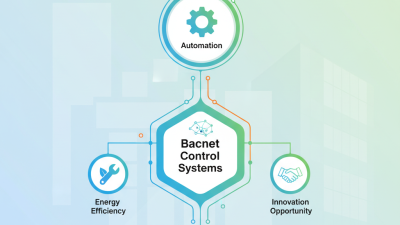
Why Choose Bacnet Control Systems for Efficient Building Management?
Efficient building management is crucial for energy savings and sustainability. Bacnet Control Systems have emerged as a leading choice in this domain. According to a recent report by the American Society of Heating, Refrigerating and Air-Conditioning Engineers (ASHRAE), buildings that utilize integrated control systems can achieve up to 30% energy savings. This statistic highlights the importance of smart management solutions.
Bacnet Control Systems facilitate seamless communication between various building components. They ensure that HVAC, lighting, and security systems work in harmony. This interoperability enhances overall operational efficiency. A report from the International Energy Agency (IEA) shows that smarter building systems can reduce energy consumption by 40% in commercial spaces.
Despite these advantages, some building managers remain hesitant to adopt Bacnet technology. Concerns often revolve around initial costs and complexity. Reflection on past implementations shows that long-term savings typically outweigh these concerns. By embracing Bacnet Control Systems, managers can take significant steps towards sustainable and efficient building operations.

Overview of Bacnet Control Systems in Building Management
BACnet control systems are integral for modern building management, enabling seamless integration of various services. These systems utilize
open protocols, allowing devices from different manufacturers to communicate effectively. According
to a report by the Building Automation Industry, about 65% of new building projects implemented BACnet, underscoring
its rising popularity.
The flexibility of BACnet systems supports diverse applications, from HVAC to security monitoring. This adaptability can lead to energy savings of up to 30%, as reported by the U.S. Department of Energy. However, implementing these systems
requires careful planning. Misalignment in system specifications can result in inefficiencies and increased operational costs,
highlighting the need for expertise in the installation process.
Trained professionals often emphasize the importance of ongoing maintenance and updates.
Data suggests that a well-maintained BACnet system improves performance and longevity, but 40% of
organizations neglect regular checks. This can lead to deterioration in efficiency, causing higher energy use and costs. So, it’s essential to weigh
the initial setup challenges against the long-term benefits of BACnet control systems.
Key Features of Bacnet Protocol for Efficient Control
Building management has evolved significantly with the introduction of Bacnet control systems. This protocol enhances communication between various building systems, such as HVAC, lighting, and security. One key feature of Bacnet is its interoperability. It allows devices from different manufacturers to work together seamlessly. This flexibility is crucial for optimizing energy use and improving occupant comfort.
Another important aspect is its scalability. Bacnet systems can be scaled to fit buildings of all sizes. Whether for a small office or a large campus, the system can adapt accordingly. This adaptability means that as building needs change, the system can grow or shrink without the need for complete overhauls. However, one might consider the complexity it brings. Managing a Bacnet system requires knowledge and expertise.
Moreover, Bacnet’s robust data logging capabilities enable facility managers to track performance over time. Analyzing this data helps in identifying inefficiencies. However, interpreting the data can sometimes prove challenging. Without proper training, managers might overlook critical insights that can enhance building efficiency. Embracing Bacnet means committing to continuous learning and improvement in building management practices.
Why Choose Bacnet Control Systems for Efficient Building Management? - Key Features of Bacnet Protocol for Efficient Control
| Key Features |
Description |
Benefits |
| Interoperability |
Bacnet supports a wide range of devices from different manufacturers. |
Ensures seamless integration and flexibility in building management. |
| Scalability |
Easily expand or modify systems as building needs change. |
Cost-effective solution for future developments. |
| Energy Efficiency |
Optimizes HVAC and lighting based on real-time data. |
Reduces energy consumption and operational costs. |
| User-Friendly Interface |
Intuitive control systems for easy management. |
Enhances user experience and reduces training time. |
| Open Protocol |
Bacnet is an open standard, promoting innovation. |
Encourages competition and lowers system costs. |
Benefits of Implementing Bacnet Systems in Buildings
Building management is evolving rapidly, and the implementation of BACnet control systems is at the forefront of this shift. According to a recent industry report, buildings equipped with BACnet systems can reduce energy consumption by up to 30%. This significant reduction is achieved through better integration of HVAC, lighting, and security systems. In fact, a study conducted by the American Society of Heating, Refrigerating and Air-Conditioning Engineers (ASHRAE) highlights that improved system interoperability can enhance operational efficiency.
Moreover, BACnet systems enable real-time monitoring and control, allowing building managers to respond promptly to potential issues. The 2022 Building Energy Efficiency Trends report indicates that 68% of facility managers prioritize real-time data for decision-making. This shift to data-driven management not only improves comfort for occupants but also leads to long-term savings on maintenance costs. However, the complexity of integrating these systems can challenge some organizations.
Employees must be adequately trained to utilize BACnet systems effectively. A lack of knowledge or skills can lead to underutilization of advanced features. This can ultimately impede seamless building management. Overcoming these hurdles is essential for fully realizing the benefits of BACnet systems. Investments in training and technology can bridge this gap, paving the way for smarter, more efficient buildings.
Benefits of Implementing Bacnet Control Systems in Buildings
Comparison of Bacnet with Other Building Management Protocols
When comparing Bacnet with other building management protocols, the differences become clear. Bacnet is designed to integrate diverse systems efficiently. This feature allows for better communication among HVAC, lighting, and security systems. Traditional protocols, like Modbus or LonWorks, often lack this level of interoperability. They operate in silos, making seamless management challenging. Bacnet's approach promotes a streamlined flow of information.
Interoperability is crucial for building management. With Bacnet, users can easily share data between devices. This leads to improved energy efficiency and cost savings. In contrast, other protocols may require significant customization for integration. Such processes can be time-consuming and expensive. For instance, using multiple protocols can complicate system upgrades or troubleshooting. Many facilities face these hurdles, leading to increased operational costs.
Not every system is perfect, though. While Bacnet excels in flexibility, its complexity sometimes poses challenges for inexperienced users. There may be a learning curve, making initial setup daunting. In some cases, the broad feature set can overwhelm users. This complexity can impede effective decision-making. Users often need to rethink their approach to truly harness Bacnet's potential.
Case Studies: Successful Bacnet Implementations in Real Estate
Bacnet control systems have transformed building management through successful implementations across various real estate projects. One notable case involved an office complex that struggled with energy inefficiency. By integrating a Bacnet-enabled system, the management team connected diverse HVAC systems seamlessly. This allowed for real-time monitoring and fine-tuning of energy consumption, leading to a significant reduction in utility costs.
In another instance, a mixed-use development implemented Bacnet to enhance tenant comfort and operational efficiency. The system facilitated centralized control over lighting, heating, and security features. While initial challenges arose in the integration phase, adjustments made based on user feedback resulted in a more streamlined operation. This case highlighted the importance of adaptability in systems design, illustrating that even a robust solution like Bacnet requires ongoing reflection and improvements.
These examples underscore the effectiveness of Bacnet in real estate management. The direct results—reduced costs, improved tenant satisfaction, and increased efficiency—demonstrate the significant impact of adopting these systems. Nonetheless, the path to successful implementation is not without its hurdles, and ongoing evaluation remains crucial.