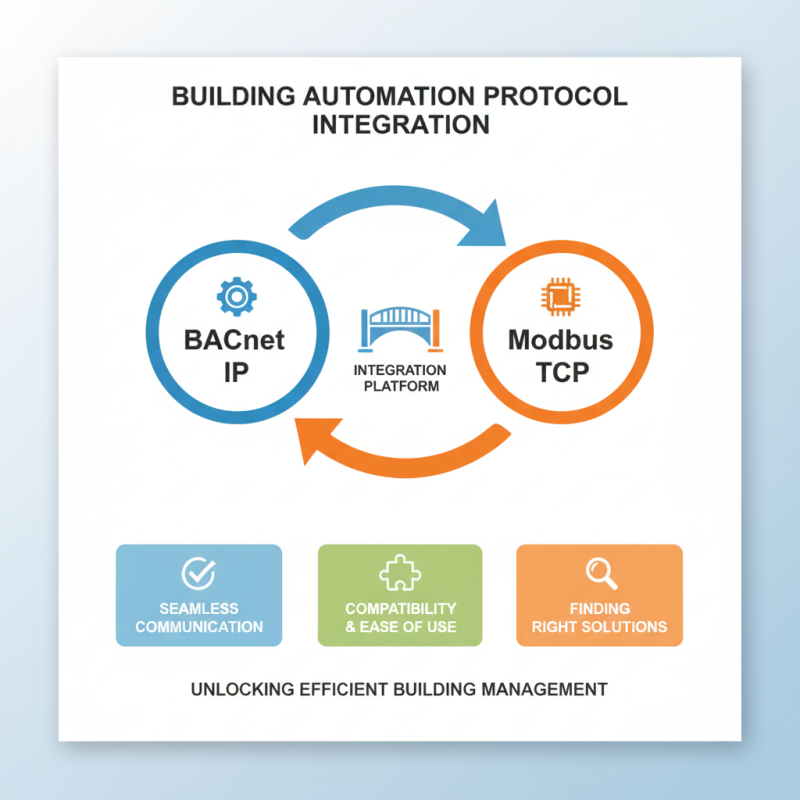
The Best Bacnet To Modbus Tcp Solutions for Seamless Integration?
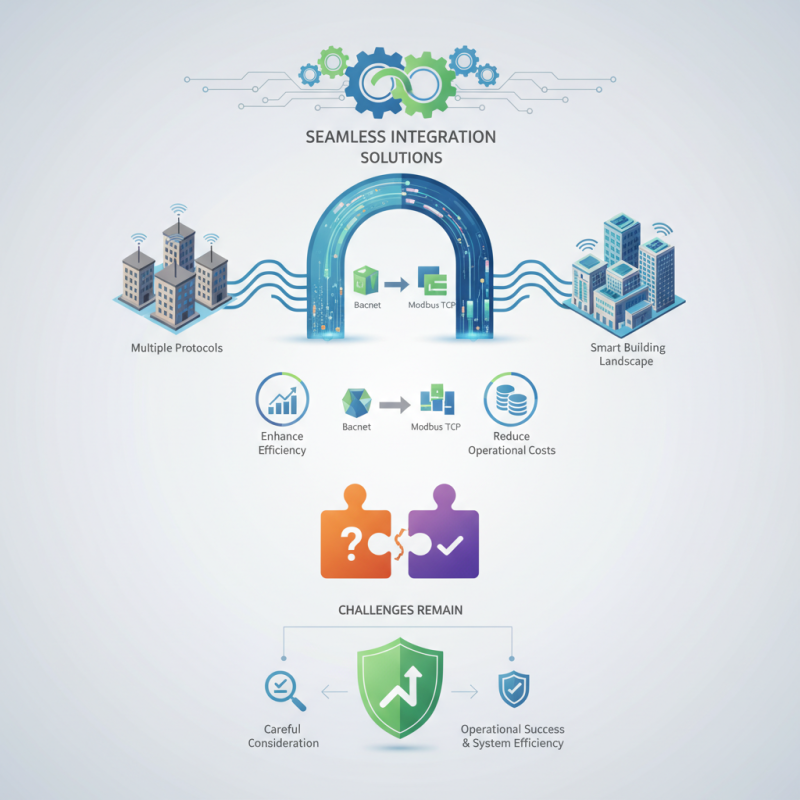
In today’s rapidly evolving smart building landscape, seamless integration between communication protocols is crucial. The harmony of systems can enhance efficiency and reduce operational costs. According to the 2022 Building Automation Market Report, around 65% of buildings now employ multiple protocols. This multi-protocol environment presents challenges, especially when converting data formats.
Bacnet To Modbus Tcp solutions emerge as vital tools for overcoming these barriers. By enabling devices to communicate, they foster interoperability. A recent industry study highlighted that 55% of integrators reported issues with data exchange. This indicates a pressing need for effective conversion solutions.
Yet, despite advancements, challenges remain. Not all systems can achieve optimal integration. Some solutions may lack compatibility with older devices. Therefore, selecting the best Bacnet To Modbus Tcp solution requires careful consideration. Identifying the right tools can significantly impact operational success in smart buildings. Such reflections guide us toward improving our integration strategies and ensuring overall system efficiency.
Understanding BACnet and Modbus TCP Protocols
BACnet and Modbus TCP are two widely used communication protocols in building automation and industrial settings. BACnet, designed for building automation, focuses on interoperability between devices from various manufacturers. Its flexibility allows users to manage HVAC, lighting, and security systems seamlessly. In contrast, Modbus TCP operates on a simple request-response mechanism. It is often found in industrial environments for monitoring and controlling equipment. Each protocol has its strengths and weaknesses, making integration crucial for cohesive operations.
Integrating BACnet with Modbus TCP can be challenging. A common issue is data loss or miscommunication during the translation process. Devices may not always respond as expected. Protocol mismatches can lead to inefficiencies. Some users find the documentation confusing, which complicates troubleshooting. A thoughtful approach to integration considers these hurdles. Solutions should be robust and adaptable. Ensuring devices communicate smoothly could save time and costs in the long run. Manufacturers often need to rethink design choices, focusing on compatibility and ease of use.
Both protocols have unique features. Understanding these characteristics facilitates better integration solutions. It is important to analyze requirements carefully. This allows for addressing specific needs without the pitfalls of overly generic solutions. Customization may be necessary for optimal performance, and investing time in understanding each protocol can yield significant long-term benefits.
Key Features of BACnet to Modbus TCP Solutions
When looking for BACnet to Modbus TCP solutions, understanding key features is essential. One vital aspect is compatibility. A good solution should easily integrate with existing systems. This compatibility reduces the time and resources needed for deployment. Sometimes, however, systems may not synchronize perfectly. This can cause frustration during installation.
Another important feature is scalability. As facilities grow, so do their integration needs. Solutions that easily adapt to increased demands provide long-term value. Moreover, user-friendly interfaces simplify the management of connections. Clear dashboards allow for monitoring and adjustments. Yet, the usability might not always meet expectations, leading to a learning curve.
Security is also a crucial consideration. Solutions should offer robust encryption to protect data. Vulnerabilities can expose sensitive information, leading to significant risks. Nonetheless, users often overlook ongoing updates. Addressing these updates is vital for maintaining system integrity. Finding a balance between features and usability often requires reflection and adjustments.
Criteria for Selecting the Best Integration Solutions
When selecting a Bacnet to Modbus TCP integration solution, several factors come into play. First, compatibility is crucial. Ensure the solutions support the specific protocols of both systems. Investigate how they handle data mapping. Look for clear methods that translate information effectively.
Next, consider user-friendliness. Complex interfaces may lead to frustration. An intuitive design enhances productivity. Users should spend less time on training and more on actual tasks. Check for documentation and support availability. Quality resources can ease the integration journey.
Cost-effectiveness cannot be ignored. While some solutions may seem affordable, hidden fees often emerge. Understand all expenses involved, from licensing to maintenance. Reflect on the long-term implications of these choices. Balancing features and budget is often challenging but necessary in this decision-making process.
Future Trends in BACnet and Modbus TCP Interoperability
As buildings become smarter, interoperability between protocols like BACnet and Modbus TCP is crucial. Recent market analysis shows that a significant 75% of new installations require integration across various systems. Companies must prioritize seamless communication for efficient building management.
Emerging trends suggest a growing demand for unified platforms that can handle multiple protocols. A study from the Building Automation Industry revealed that 65% of stakeholders prefer solutions that streamline integration. This shift reflects a desire for reduced operational costs and improved efficiency. However, implementing these systems can be complex.
Tips: Ensure your integration solution has robust security features. Lack of cybersecurity can lead to vulnerabilities. Additionally, training staff on new systems will enhance effectiveness. Integration may seem daunting, but investing in proper tools pays off. Balancing innovation with usability is key for future success.
The Best Bacnet To Modbus Tcp Solutions for Seamless Integration
| Solution Name |
Integration Type |
Supported Protocols |
Latency |
Scalability |
Ease of Use |
| Solution A |
Gateway Integration |
BACnet, Modbus TCP |
50 ms |
High |
User-friendly |
| Solution B |
Software Solution |
Modbus TCP, MQTT |
70 ms |
Medium |
Moderate |
| Solution C |
Cloud-Based Solution |
BACnet, Modbus RTU |
30 ms |
Very High |
Very Easy |
| Solution D |
Protocol Converter |
BACnet, Modbus TCP, SNMP |
45 ms |
High |
Easy |