Understanding Bacnet Over Ethernet Benefits and Applications?
Bacnet Over Ethernet offers significant advantages for building automation. This protocol provides a seamless method for communication between devices over a local area network. By utilizing standard Ethernet infrastructure, it simplifies installation and reduces costs.
The flexibility of Bacnet Over Ethernet allows for diverse applications. It supports various devices, such as HVAC units, lighting systems, and security applications. This integration enhances operational efficiency and improves energy management. However, not all implementations go smoothly. Network congestion can pose challenges, impacting performance.
Moreover, the interoperability of different systems raises concerns. Some devices may not communicate well, resulting in inefficiencies. Engineers must consider these factors carefully. Despite these hurdles, the benefits of Bacnet Over Ethernet continue to drive its adoption across various industries. Understanding these aspects is crucial for successful implementation.

Benefits of Using Bacnet Over Ethernet in Building Automation Systems
Bacnet over Ethernet is transforming building automation systems. It enables seamless communication between devices. This leads to greater efficiency in managing HVAC, lighting, and security. By utilizing Ethernet, systems can support high data rates. This ensures real-time updates and monitoring.
Using Bacnet over Ethernet offers significant benefits. Installation is straightforward due to existing network infrastructure. It reduces wiring costs and simplifies setup. Devices can be added or removed easily from the network. However, this flexibility can sometimes create confusion in management.
Despite its advantages, careful planning is essential. Network congestion might occur with too many devices. Potential cyber threats are also a consideration. Security measures are necessary to safeguard the system. Regular updates and monitoring are vital practices for maintaining performance. Balancing these factors is crucial for optimal operation.
Key Applications of Bacnet Over Ethernet in Modern Infrastructure
Bacnet over Ethernet is transforming modern infrastructures. Its ability to streamline communication among building systems is significant. More buildings are adopting smart technologies, making Bacnet essential. This protocol offers interoperability, which simplifies integration with existing systems. Many facilities are using it to connect HVAC, lighting, and security systems seamlessly.
Key applications range from smart buildings to industrial automation. In commercial spaces, energy management becomes efficient with Bacnet. It allows real-time monitoring of energy consumption. This leads to cost savings and sustainability improvements. Additionally, hospitals enhance patient comfort by adjusting environmental controls automatically. Schools use Bacnet to manage classroom environments effectively, benefiting students and staff alike.
However, integrating Bacnet over Ethernet has challenges. Existing systems may require upgrades to support new technology. Furthermore, staff training is often necessary to ensure proper usage. Some facilities find it difficult to adapt to fast-changing environments. Understanding these complexities is crucial for successful implementation. Embracing this technology can significantly improve operational efficiencies, but careful planning is essential.
Technical Overview of Bacnet Protocol and Ethernet Communication
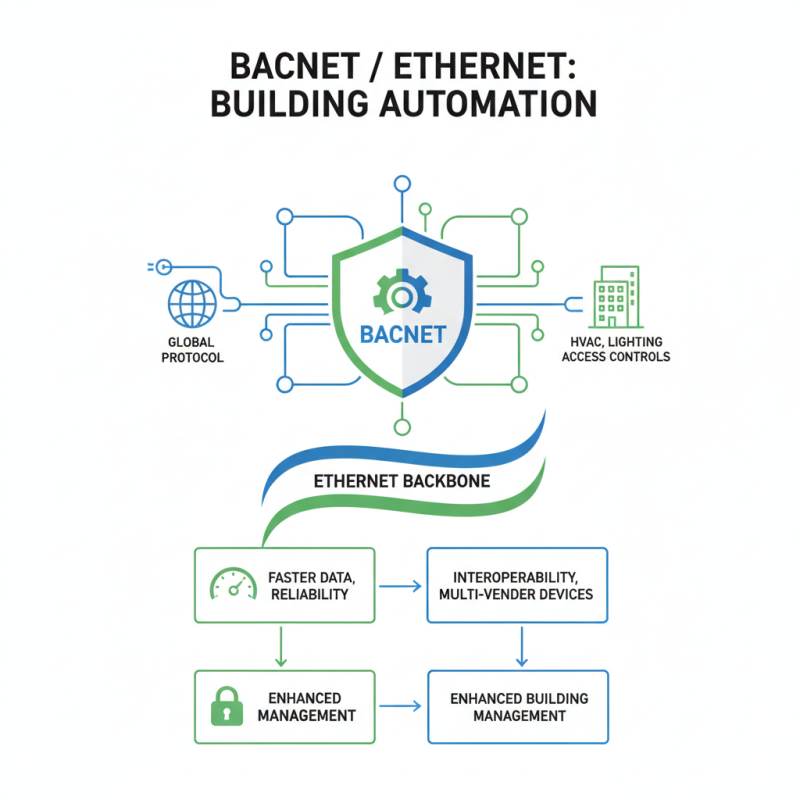
Bacnet is a widely used protocol in building automation. It facilitates communication among various devices and systems. Ethernet serves as the backbone for Bacnet, allowing for faster data transmission and increased reliability. The convergence of Bacnet and Ethernet enhances interoperability between devices from different manufacturers.
One key benefit of using Bacnet over Ethernet is flexibility. Users can connect multiple devices without extensive rewiring. This reduces installation time and costs. Additionally, Ethernet can support higher data rates, which means real-time control and monitoring are more achievable. Despite these advantages, challenges remain. Network congestion can occur, especially with large systems. Proper configurations and management are essential to prevent performance issues.
Security is another concern with Bacnet over Ethernet. As communication occurs over a common network, the risk of cyber threats increases. Implementing encryption and monitoring systems can help mitigate these risks. It's important to continually assess and improve these security measures. This ensures a robust and reliable environment for building automation.
Comparative Analysis of Bacnet Over Ethernet vs. Other Protocols
Bacnet over Ethernet is a powerful protocol for building automation. It offers several advantages over other communication methods. Its ability to work seamlessly across networks makes it a popular choice. Moreover, its flexibility allows integration with various systems. This adaptability can sometimes introduce complexities that require careful management.
When comparing Bacnet over Ethernet to other protocols, some nuances appear. Other protocols may offer simplier setups, but they often lack the interoperability of Bacnet. For instance, Modbus and KNX are straightforward but may fall short in versatility. Users sometimes find Bacnet’s layers of functionality overwhelming. Understanding its architecture can be a steep learning curve. However, once navigated, the benefits become clearer.
Performance is another consideration. While Bacnet excels in large-scale applications, smaller systems might not need this depth. Connection reliability is crucial, yet cumbersome setups can deter some users. Network congestion is possible, leading to latency issues. Balancing these aspects is key for effective implementation. Adopting Bacnet requires an honest assessment of specific use cases and objectives.
Future Trends in Bacnet Over Ethernet Technology and Its Impact
The future of BACnet over Ethernet looks promising. As more buildings adopt smart technologies, BACnet's role continues to evolve. Its ability to facilitate communication between devices is crucial. We're seeing a rise in interoperability among systems, which enhances efficiency. However, challenges remain. Security issues must be addressed carefully.
Tips: Always assess compatibility before adopting new technologies. Look for ways to integrate with existing systems.
Additionally, the integration of IoT with BACnet over Ethernet is becoming a trend. This combination expands the capabilities of building management systems. However, more devices mean more data. Managing this data becomes complex and may lead to inefficiencies. It's essential to find balance.
Tips: Regular system audits can help maintain efficiency. Pay attention to data flow and performance metrics.
As more companies adopt these technologies, it’s vital to stay updated on standards. Not all implementations are equal, and their impact can vary. Adaptation is key to leveraging the benefits of BACnet over Ethernet.